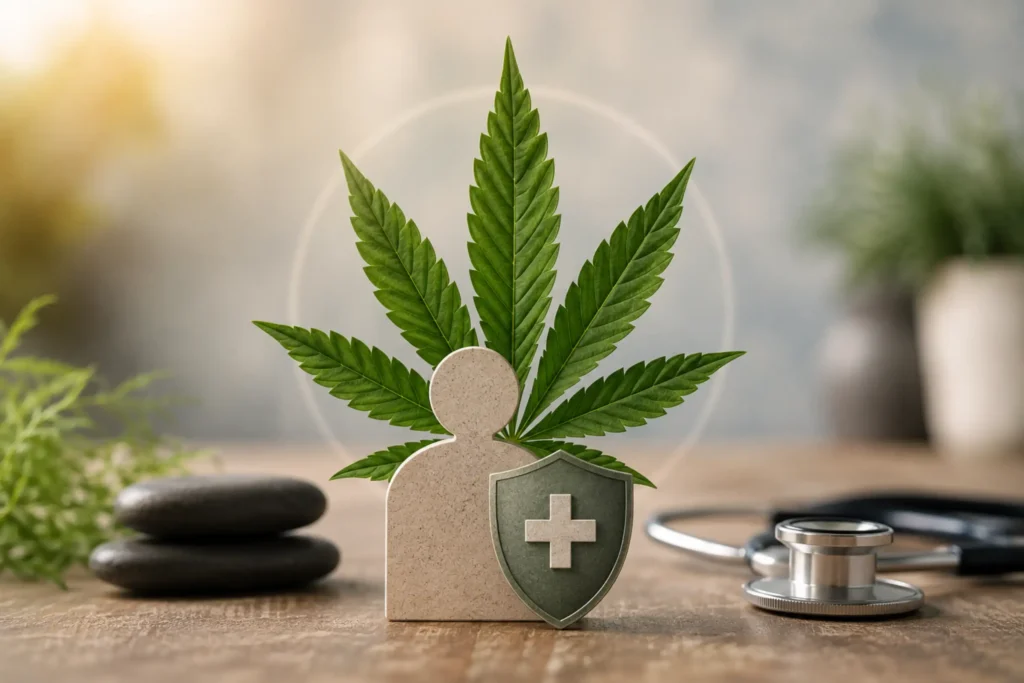
If you have a complicated medical history, you may wonder whether a health condition could prevent you from getting a medical marijuana card in Virginia. The short answer is reassuring: Virginia doesn’t have a specific list of medical conditions that automatically disqualify patients from medical cannabis certification.
Instead, your practitioner evaluates your health case by case. The key question isn’t simply what diagnoses you have. It’s whether the potential benefits of medical cannabis are likely to outweigh the risks for you.
For most patients, even those with several medical problems, certification is possible. Still, certain conditions deserve extra caution and may cause a practitioner to delay or decline certification.
Are There Disqualifying Conditions for Medical Marijuana in Virginia?

Virginia takes a broad approach to medical cannabis eligibility.
Under Virginia law, a practitioner can issue a medical cannabis certification for a diagnosed condition or disease when the practitioner determines that the patient may benefit from cannabis. Unlike some states, Virginia doesn’t limit certification to a short list of approved diagnoses.
That means conditions such as chronic pain, neuropathy, insomnia, anxiety, arthritis, PTSD, migraines, and many other health problems may be considered.
But eligibility isn’t automatic.
Virginia regulations require practitioners to review relevant medical and prescription history and determine whether the potential therapeutic benefits of cannabis are likely to outweigh the patient’s health risks.
That’s where certain medical conditions become important.
Suggested Reading: How to Qualify for Medical Cannabis Certification
Can Psychosis or Schizophrenia Prevent Cannabis Certification?

Active psychosis is one of the strongest reasons for caution with THC-containing cannabis.
THC affects brain areas involved in perception, thinking, memory, and mood. Research suggests that THC can worsen paranoia, hallucinations, and psychotic symptoms in susceptible individuals.
Someone currently experiencing hallucinations, delusions, severe paranoia, or significantly impaired judgment may not be an appropriate candidate for THC.
A history of schizophrenia or a previous psychotic episode also deserves careful consideration. Depending on the circumstances, a practitioner might recommend avoiding THC, consulting the patient’s psychiatrist, or deciding that cannabis isn’t medically appropriate.
This doesn’t mean every mental health condition prevents certification. Anxiety, depression, PTSD, and other psychiatric diagnoses aren’t the same as active psychosis and should be evaluated individually.
What About Serious Heart Disease?
Cannabis can temporarily affect heart rate and blood pressure, particularly products containing THC.
For most healthy adults, these changes aren’t necessarily dangerous. The situation can be different for someone with unstable cardiovascular disease.
Additional evaluation may be appropriate if you have:
- A recent heart attack
- Unstable angina
- Unexplained or ongoing chest pain
- Serious heart rhythm abnormalities
- Severe or unstable heart failure
- Poorly controlled cardiovascular disease
Having high blood pressure, coronary artery disease, or another stable heart condition doesn’t automatically prevent you from becoming a medical cannabis patient.
Stability matters. So do your medications, age, cannabis experience, and overall cardiovascular risk.
Can You Get a Medical Marijuana Card While Pregnant?
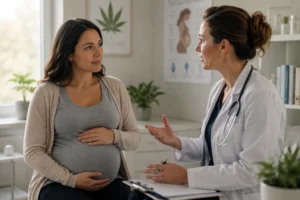
Pregnancy presents a different situation.
Major medical organizations generally recommend avoiding cannabis during pregnancy and breastfeeding because THC can cross the placenta and cannabinoids can enter breast milk. We don’t have adequate evidence showing that cannabis exposure during pregnancy is safe for a developing baby.
For that reason, pregnancy or breastfeeding may cause a practitioner to decline certification or recommend alternative treatments.
Patients who are pregnant, planning pregnancy, or breastfeeding should discuss cannabis with their obstetrician and other treating healthcare professionals.
Cannabis Use Disorder May Affect Certification
Using cannabis previously doesn’t disqualify you from Virginia’s medical cannabis program. Many patients seeking certification already have experience with cannabis.
Cannabis use disorder is different.
Possible warning signs include:
- Difficulty controlling cannabis use
- Consistently using more than intended
- Repeated unsuccessful attempts to cut down
- Cannabis interfering with work or relationships
- Continuing cannabis despite significant health or personal problems
- Spending substantial amounts of time obtaining or using cannabis
When cannabis itself has become a significant medical or behavioral problem, providing greater access may not be appropriate.
Severe, uncontrolled misuse of alcohol or other drugs can also complicate certification if it makes the safe use of medical cannabis unlikely.
What If You’ve Had a Bad Reaction to Marijuana?
Tell your practitioner.
A previous episode of anxiety, dizziness, or an unpleasant “high” doesn’t necessarily mean you can’t use medical cannabis. Sometimes these reactions happen because a person consumed too much THC, particularly with edibles.
A serious previous reaction deserves more attention.
Examples include severe paranoia, psychosis, fainting, significant heart symptoms, or another reaction requiring medical treatment.
Your practitioner may recommend avoiding cannabis or choosing a different cannabinoid profile, dose, or method of administration.
Cannabinoid Hyperemesis Syndrome Can Be a Problem
Cannabinoid hyperemesis syndrome (CHS) is associated with prolonged cannabis use and can cause repeated episodes of severe nausea, vomiting, and abdominal pain.
Continuing cannabis can perpetuate the problem.
For someone with active or recurrent CHS, medical cannabis certification may not be appropriate. Stopping cannabis is generally an important part of managing the condition.
That’s particularly important because patients sometimes initially use more cannabis in an attempt to control their nausea, unintentionally making the underlying problem worse.
Can Prescription Medications Prevent You From Getting a Medical Marijuana Card?
Usually, no.
Taking prescription medications doesn’t automatically prevent medical cannabis certification. However, your practitioner should consider potential drug interactions before recommending cannabis.
THC and CBD may interact with certain medications or increase effects such as sedation, dizziness, confusion, and low blood pressure. Additional caution may be necessary with:
- Sedatives and sleep medications
- Certain seizure medications
- Blood thinners
- Some psychiatric medications
- Medications with a narrow therapeutic range
Don’t stop or reduce an important prescription medication simply because you’re considering medical cannabis. Talk with the healthcare professional managing that medication first.
Do Age or Multiple Medical Problems Prevent Certification?

Not necessarily.
Older patients commonly have several diagnoses and take multiple medications. That doesn’t automatically make medical cannabis inappropriate.
In fact, older adults may consider cannabis for chronic pain, neuropathy, arthritis, insomnia, appetite problems, or symptoms associated with serious illness.
They may also be more sensitive to THC. Dizziness, sedation, confusion, and balance problems can increase fall risk.
For these patients, starting with a low dose and increasing slowly can be especially important.
What Happens If Your Doctor Thinks Cannabis Isn’t Safe?
A medical cannabis evaluation is a medical decision—not simply an approval process.
Sometimes a practitioner may recommend waiting until another condition becomes stable. Other patients may need additional information from a cardiologist, psychiatrist, obstetrician, or another treating clinician.
In some situations, the discussion may be about how cannabis could be used rather than whether it can be used at all. A lower-THC product, smaller dose, different route of administration, or closer monitoring may reduce risk.
Occasionally, the safest recommendation is not to use cannabis.
The Bottom Line: Most Medical Conditions Don’t Automatically Prevent Certification
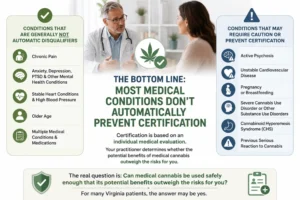
Virginia doesn’t have a standard list of medical conditions that automatically prevent you from receiving a medical marijuana certification.
Instead, eligibility is based on an individual medical evaluation. Your practitioner considers your diagnosis, current health, medications, medical history, previous cannabis experience, and potential risks before determining whether medical cannabis is appropriate.
Active psychosis, unstable cardiovascular disease, pregnancy, severe cannabis use disorder, cannabinoid hyperemesis syndrome, and previous serious reactions to cannabis may require additional evaluation or make cannabis inappropriate for some patients.
But having a chronic illness, mental health diagnosis, heart condition, multiple prescriptions, or simply being an older adult doesn’t automatically mean you’ll be denied.
The real question is more personal: Can medical cannabis be used safely enough that its potential benefits outweigh the risks for you?
For many Virginia patients, the answer may be yes.
Medical Disclaimer: This article is provided for educational purposes only and isn’t a substitute for professional medical advice, diagnosis, or treatment. Medical cannabis isn’t appropriate for everyone and may cause side effects or interact with medications. Discuss your medical conditions, medications, pregnancy status, and other health concerns with a qualified healthcare professional before using cannabis.

Dr. Nicholas Marsh is board-certified by the American Board of Anesthesiologists and has over 37 years of healthcare experience. Recognized by FindaTopDoc.com for clinical excellence, he now focuses on educating, supporting, and certifying patients for medical cannabis.