
If you’ve been using hemp-derived THC gummies, tinctures, or other products for sleep, pain, anxiety, or another health concern, you may be wondering how to switch to medical cannabis. That’s especially relevant in Virginia, where new hemp laws have removed many of the intoxicating hemp products patients previously bought online, at vape shops, or from other retailers.
The transition doesn’t have to be difficult. In fact, the hemp product you’ve already been using gives you a useful starting point. Save the package, figure out what cannabinoids and doses you’ve been taking, and bring that information with you when choosing a medical cannabis product.
What Changed With Hemp-Derived THC in Virginia?
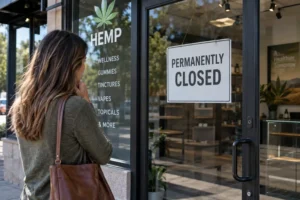
Virginia significantly tightened its hemp laws on August 15, 2026. Hemp products sold in the Commonwealth can now contain no more than 0.3% total THC and no more than 2 milligrams of total THC in the entire package. The previous exception allowing higher-THC products when they contained at least 25 times as much CBD as THC was also eliminated.
That means many intoxicating hemp-derived gummies and similar products that patients had been purchasing can no longer legally be manufactured or sold in Virginia. There was no sell-through or grace period for retailers with noncompliant inventory.
As a result, vape shops, gas stations, and health food stores no longer carry these products, and online hemp distributors no longer serve Virginia. Some hemp businesses have shifted to other products, like artwork. Several Virginia “hemp dispensaries” have closed their doors entirely.
This doesn’t mean Virginians have lost access to THC. Medical cannabis remains available to qualified patients throughVirginia’s regulated medical cannabis program.
For someone who has been using hemp THC therapeutically, getting medically certified can provide a more straightforward way to transition to regulated cannabis products while receiving professional guidance.
Read more about Virginia’s new hemp restrictions HERE.
Start With the Hemp Product You’ve Been Using
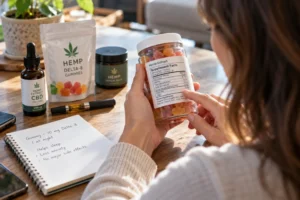
Don’t throw away that old package just yet.
Before visiting a medical cannabis dispensary, take a photograph of the front and back labels—or bring the package with you. You’re trying to answer a few basic questions:
- What kind of THC were you taking? Delta-8, delta-9, delta-10, THC-P, or something else?
- How many milligrams were in each serving?
- Did it contain CBD? If so, how much?
- How much did you actually take? One gummy? Half? A dropper of tincture?
- When did you take it?
- What did it help?
- Did you experience unwanted effects?
Pay particular attention to milligrams per serving versus milligrams per package. A bottle labeled “500 mg” on the front doesn’t necessarily mean you were taking 500 mg at a time.
This information creates a useful starting point for choosing your new medical product.
Is 10 mg of Hemp THC the Same as 10 mg of Medical Cannabis THC?
Not always.
Suppose your hemp gummy contained 10 mg of delta-9 THC. A medical cannabis edible containing delta-9 THC can provide a reasonable reference for discussing your previous dose, but that doesn’t guarantee the two products will feel identical.
Formulation matters. So do your metabolism, tolerance, whether you’ve recently eaten, and the amounts of other cannabinoids in the product.
The comparison gets even harder with delta-8 THC, delta-10 THC, THC-P, HHC, and cannabinoid blends. Don’t assume that 10 mg of one cannabinoid equals 10 mg of another.
There’s no simple conversion chart that works reliably for everyone.
How Do You Choose Your First Medical Cannabis Product?

Start with what you already know.
If a hemp-derived gummy worked well for you at bedtime, for example, you might discuss a medical cannabis edible with the dispensary pharmacist rather than suddenly switching to vaping. If you’ve been comfortable with a CBD-rich tincture, a medical product containing both CBD and THC might make more sense than jumping straight to a high-THC product.
Think about three things: the cannabinoid, the dose, and the delivery method.
The goal isn’t to find the strongest cannabis product in the dispensary. It’s to find the lowest practical dose that provides the benefit you’re looking for without troublesome side effects.
Still need to get your Virginia medical cannabis certification? No problem, we make it easy with online evaluations. Request an appointment HERE.
Start Low, Even If You’re Experienced With Hemp THC
Having experience with hemp-derived THC doesn’t necessarily mean you have the same tolerance for a new medical cannabis product.
A familiar rule still applies: start low and go slow.
This is particularly important with edibles. THC taken by mouth may take considerably longer to produce noticeable effects than inhaled cannabis, and those effects can last much longer. Don’t take another dose simply because you don’t feel anything right away.
When changing products, give yourself time to learn how the new one affects you before making substantial dose increases.
Keep a Simple Cannabis Journal
You don’t need an app or elaborate spreadsheet. A note on your phone works fine.
Record:
Product → Dose → Time → Effect → Side effects → Duration
For example:
Gummy → 5 mg THC → 8 p.m. → Slept better → Mild dry mouth → About 6 hours
After several uses, you may begin seeing patterns. That information can also make conversations with your healthcare practitioner or dispensary pharmacist much more productive.
Your Dispensary Pharmacist Can Help With the Transition

One advantage of Virginia’s medical cannabis program is that you don’t have to figure everything out yourself.
Virginia regulations provide medical cannabis patients an opportunity to consult with a pharmacist before their initial dispensing under a certification.
Bring your previous hemp package or a clear photograph of the label and say:
“This is what I’ve been taking, this is how much I use, and this is what it helps. What medical cannabis product would be a reasonable place to start?”
That’s useful information.
Dispensary staff can also explain the products available—gummies, tinctures, capsules, vapes, THC ratios, and different concentrations. For more complicated dosing questions, medication interactions, significant medical problems, or troublesome side effects, ask the pharmacist or your healthcare practitioner.
Don’t Shop Based on THC Alone
A bigger THC number isn’t automatically better.
Medical cannabis products can contain different proportions of THC and CBD, along with smaller amounts of other cannabinoids and terpenes. Some patients may prefer balanced THC products because they provide the desired therapeutic effects with less intoxication.
Start with the problem you’re trying to address. Is it sleep? Pain? Nausea? Appetite? Muscle spasms?
Then choose the product around that goal—not around the largest THC number on the menu.
The Bottom Line: You Don’t Have to Start Over
If a hemp-derived THC product has been helping you, your previous experience still matters.
Save the label. Know what you’ve been taking. Bring that information to the medical cannabis dispensary. Then make the transition gradually.
Virginia’s August 2026 hemp restrictions mean that many intoxicating hemp products patients once relied on are no longer legal for retailers to sell as hemp products. For qualified patients, medical cannabis offers an alternative through the Commonwealth’s regulated medical system.
Most importantly, you don’t have to guess your way through the change. Your previous experience, combined with guidance from your medical cannabis practitioner, dispensary pharmacist, and knowledgeable dispensary staff, can help you find a product and dose that better fits your needs.
Medical disclaimer: This article is for educational purposes only and isn’t a substitute for individualized medical advice, diagnosis, or treatment. Cannabis can cause side effects and interact with medications. Talk with a qualified healthcare professional or dispensary pharmacist before starting or changing a medical cannabis regimen.

Dr. Marsh, is a board-certified anesthesiologist with over 37 years of healthcare experience. A graduate of Syracuse University, the New York College of Osteopathic Medicine, and Rutgers University Medical School, he has earned recognition from FindaTopDoc.com for clinical excellence. Dr. Marsh founded ReThink-Rx in 2021, where he now focuses on educating, supporting, and certifying patients for medical cannabis.