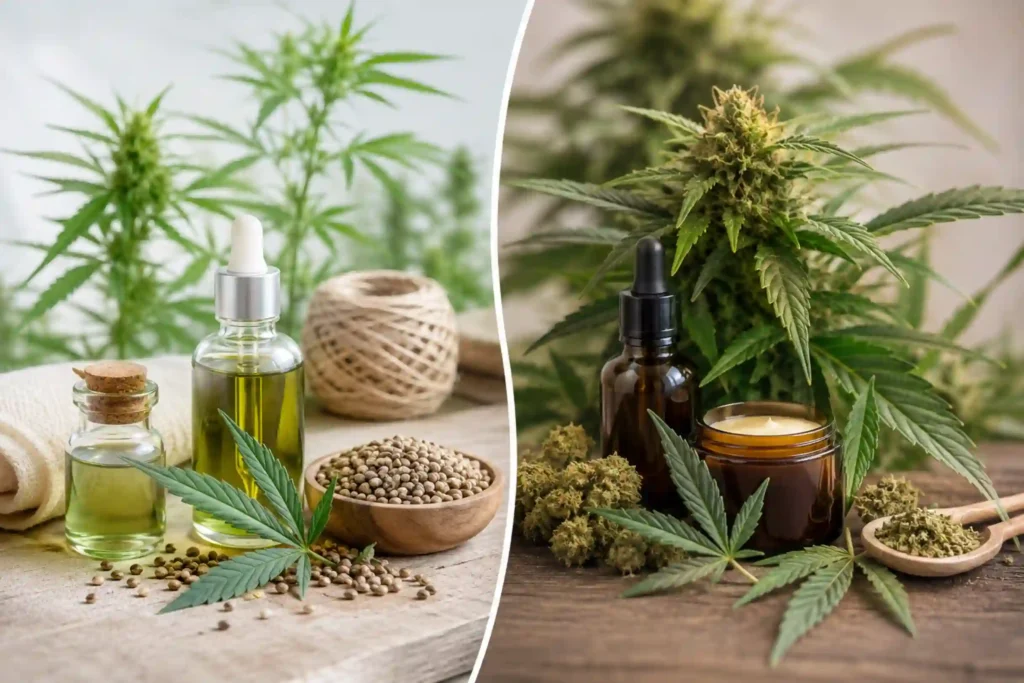
Hemp vs. Cannabis: What’s the Difference?
If you’ve walked into a vape shop, convenience store, or even a gas station recently, you’ve probably noticed products labeled CBD, Delta-8, THCA, or hemp THC. At the same time, Virginia’s licensed medical cannabis dispensaries continue to provide physician-recommended cannabis products for qualified patients.
So what’s the difference?
Although hemp and cannabis come from the same plant species, they are regulated very differently. Those differences affect everything from product quality and safety to legality and medical oversight. With major federal changes expected to take effect later this year, understanding these distinctions is more important than ever.
If you’re considering cannabinoid therapy for a qualifying medical condition, knowing where your products come from—and how they’re regulated—can help you make safer, more informed decisions.
Hemp and Cannabis Are the Same Plant
Botanically, hemp and cannabis both belong to the Cannabis sativa species. The distinction is purely a legal one.
Federal law defines hemp as cannabis containing 0.3% Delta-9 THC or less by dry weight. Plants containing more than that amount are legally classified as cannabis (often referred to as marijuana under federal law).
Although the plants may look nearly identical, they are grown for very different purposes.
Hemp is commonly cultivated for:
- CBD production
- Food products
- Hemp seed oil
- Clothing and textiles
- Paper
- Industrial materials
- Building products
Medical cannabis is cultivated for:
- Therapeutic THC
- CBD-rich formulations
- Balanced THC/CBD products
- Specific terpene profiles
- Minor cannabinoids such as CBG and CBN
- Consistent medical dosing
Today’s licensed medical cannabis products are carefully developed to provide predictable therapeutic effects for patients with chronic medical conditions.
Why Hemp Products Became So Popular
Hemp has been part of agriculture in the United States for over 250 years. The 2018 Farm Bill clarified and legalized hemp cultivation throughout the United States but, due to some inadequate language, the bill inadvertently allowed the sudden rapid expansion of hemp-derived intoxicating products. While the law was primarily intended to support agricultural hemp production, it created a loophole that dramatically expanded the market for hemp-derived cannabinoids.
Manufacturers discovered they could extract CBD from hemp and chemically convert it into intoxicating compounds such as:
- Delta-8 THC
- Delta-9 THC
- Delta-10 THC
- THC-O
- HHC
- Other hemp-derived THC analogs
These products quickly appeared in:
- Vape shops
- Smoke shops
- Convenience stores
- Gas stations
- Online retailers
Because these products were sold outside state-regulated medical cannabis programs, many entered the marketplace with far less regulatory oversight than medical cannabis products.
Medical Cannabis Is Produced Under Much Higher Standards
Virginia’s medical cannabis program is designed around patient safety.
Products sold through licensed Virginia dispensaries undergo rigorous quality control before reaching patients. Testing typically includes:
- Cannabinoid potency
- Terpene analysis
- Heavy metals
- Pesticides
- Microbial contamination
- Residual solvents
- Manufacturing quality assurance
In addition, patients first receive an evaluation from a licensed healthcare practitioner to determine whether medical cannabis may be appropriate for their condition.
Licensed dispensaries also employ knowledgeable pharmacists and trained staff who can help patients understand dosing, product selection, and safe use.
This level of oversight simply isn’t available when purchasing cannabinoid products from many retail stores.
Hemp Products Are Regulated Very Differently
Many hemp manufacturers produce excellent products and voluntarily perform comprehensive laboratory testing. But this is not a requirement, and many manufacturers fall short, producing products with variable consistency and safety.
However, unlike Virginia’s medical cannabis program, there has historically been no single nationwide regulatory system governing intoxicating hemp-derived products.
Independent testing has shown that some commercially available hemp products may:
- Contain significantly different cannabinoid concentrations than listed
- Include unexpected cannabinoids
- Exceed legal THC limits
- Contain contaminants
- Lack consistent quality control
For patients using cannabinoids to manage chronic pain, anxiety, sleep disorders, or neurological conditions, these inconsistencies can lead to unpredictable results.
Why Federal Hemp Laws Are Changing
Federal lawmakers have become increasingly concerned that the 2018 Farm Bill unintentionally allowed a nationwide market for intoxicating hemp products with relatively little oversight.
Many of these products have been marketed with:
- Minimal age verification
- Bright, youth-oriented packaging
- Inconsistent testing
- Limited manufacturing standards
- No physician involvement
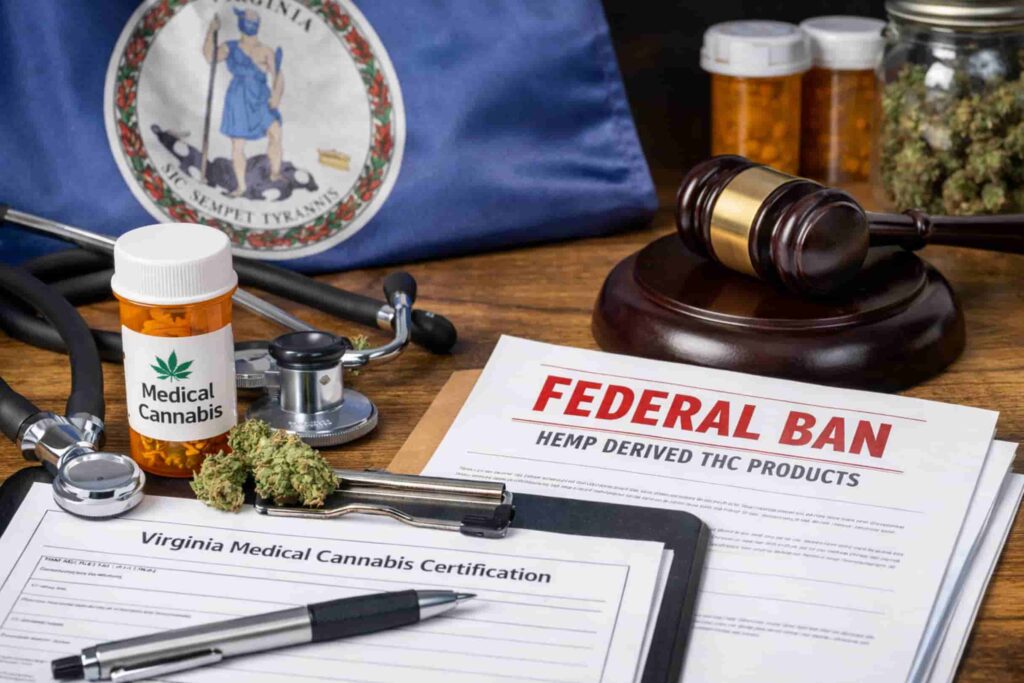
To address these concerns, Congress has approved legislation that substantially narrows the federal definition of legal hemp. Unless the law is modified before implementation, new federal restrictions are expected to take effect in November 2026.
These changes are expected to prohibit most intoxicating hemp-derived THC products currently sold outside regulated cannabis programs while preserving traditional industrial hemp and many non-intoxicating CBD products. The goal is to close the loophole that allowed psychoactive hemp products to proliferate with limited oversight.
Which Products May Disappear?
If the federal changes take effect as planned, consumers may see many familiar products disappear from retail shelves, including:
- Delta-8 THC gummies
- Delta-8 vape cartridges
- Delta-9 products
- Delta-10 products
- THCA flower marketed as hemp
- Hemp-derived THC beverages
- Many intoxicating hemp extracts sold online
Businesses throughout the hemp industry are already preparing for these regulatory changes.
Why Virginia Medical Cannabis Patients Are Different
These federal hemp restrictions are not expected to affect Virginia’s licensed medical cannabis program.
Patients who receive a Virginia medical cannabis certification can continue obtaining products through state-authorized medical dispensaries that operate under strict pharmaceutical-style regulations.
Benefits include:
- Physician guidance
- Laboratory-tested products
- Consistent dosing
- Professional dispensary counseling
- Reliable manufacturing standards
- Legal access under Virginia law
For many patients, this provides greater confidence that they know exactly what they are purchasing.
Should You Choose Hemp or Medical Cannabis?
The answer depends on your goals.
If you’re simply interested in wellness products such as hemp seed oil or non-intoxicating CBD, then compliant hemp products may still be appropriate.
However, if you’re treating chronic pain, arthritis, PTSD, cancer symptoms, multiple sclerosis, insomnia, neuropathy, or another qualifying medical condition, medical cannabis offers several important advantages:
- Better product consistency
- Comprehensive laboratory testing
- Healthcare provider supervision
- Professional guidance on dosing
- Access to a wider range of therapeutic formulations
The Bottom Line
Although hemp and cannabis come from the same plant species, they exist in two very different regulatory systems.
Hemp products became widely available because of the 2018 Farm Bill, but the rapid growth of intoxicating hemp-derived cannabinoids has prompted Congress to tighten federal regulations. Beginning later this year, many Delta-8, THCA, and similar products may no longer be legally available outside regulated cannabis programs.
Virginia’s medical cannabis program continues to provide patients with carefully tested products, physician oversight, and licensed dispensaries dedicated to patient safety.
For individuals seeking consistent, high-quality cannabinoid therapy, obtaining products through Virginia’s regulated medical cannabis program remains one of the safest and most reliable options.
Frequently Asked Questions
Is hemp the same as cannabis?
Botanically, yes. Legally, hemp contains no more than 0.3% Delta-9 THC, while cannabis contains higher levels of THC.
Will CBD products remain legal?
Many non-intoxicating CBD products are expected to remain available, although federal regulations may become more stringent regarding manufacturing and labeling.
Why are Delta-8 and THCA products being restricted?
Federal lawmakers are seeking to close loopholes that allowed intoxicating hemp-derived THC products to be sold outside regulated medical cannabis programs.
Are Virginia medical cannabis dispensaries affected?
No. Virginia’s licensed medical cannabis program operates under separate state regulations and is expected to continue serving qualified patients.
Is medical cannabis safer than products from vape shops?
Medical cannabis sold through Virginia’s licensed dispensaries undergoes extensive laboratory testing, quality assurance, and professional oversight, providing a higher level of consistency and patient protection than many unregulated retail products.
Disclaimer: This article is for educational purposes only and is not a substitute for professional medical advice, diagnosis, or treatment. Always consult a qualified healthcare provider with any questions about your health or medical conditions.

Dr. Marsh, is a board-certified anesthesiologist with over 37 years of healthcare experience. A graduate of Syracuse University, the New York College of Osteopathic Medicine, and Rutgers University Medical School, he has earned recognition from FindaTopDoc.com for clinical excellence. Dr. Marsh founded ReThink-Rx in 2021, where he now focuses on educating, supporting, and certifying patients for medical cannabis.