

Nerve pain can be one of the most frustrating and difficult types of chronic pain to treat. Unlike muscle or joint pain, neuropathic pain often feels like burning, tingling, electric shocks, stabbing sensations, or painful numbness. Traditional medications don’t always provide adequate relief, leaving many patients searching for additional treatment options.
Research suggests that medical cannabis may help reduce nerve pain in some patients by interacting with the body’s natural pain-regulating system. While it isn’t a cure for neuropathy, medical marijuana may help lessen pain intensity, improve sleep, reduce muscle tension, and enhance overall quality of life when used as part of a comprehensive treatment plan.
What Is Nerve Pain?
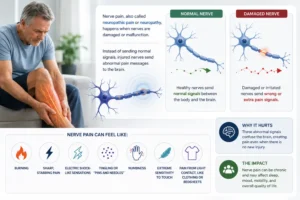
Nerve pain, also called neuropathic pain or neuropathy, develops when nerves become damaged or malfunction. Instead of transmitting normal sensations, injured nerves send abnormal pain signals to the brain.
Unlike pain caused by an injury or inflammation, neuropathic pain may continue long after the original problem has healed—or it may develop without any obvious injury at all.
Patients often describe nerve pain as:
- Burning sensations
- Sharp, stabbing pain
- Electric shock-like feelings
- Tingling or “pins and needles”
- Numbness
- Extreme sensitivity to touch
- Pain from light contact, such as clothing or bedsheets
For many people, nerve pain becomes chronic, affecting sleep, work, mobility, and emotional well-being.
What Causes Neuropathy?
Neuropathy can develop from many different medical conditions.
Common causes include:
- Diabetes (diabetic neuropathy)
- Spinal stenosis
- Herniated discs
- Sciatica
- Multiple sclerosis (MS)
- Chemotherapy-induced neuropathy
- Shingles (postherpetic neuralgia)
- Alcohol-related nerve damage
- Vitamin deficiencies
- Autoimmune diseases
- Nerve injuries
- Stroke
- Complex regional pain syndrome (CRPS)
Sometimes, the exact cause cannot be identified. This is known as idiopathic neuropathy.
Why Is Nerve Pain So Difficult to Treat?
Neuropathic pain behaves differently than other forms of pain.
Instead of responding primarily to anti-inflammatory medications, damaged nerves continue generating pain signals even when there is no ongoing tissue injury.
Because of this, many commonly prescribed pain medications provide only partial relief.
Patients are often treated with medications such as:
- Gabapentin
- Pregabalin (Lyrica)
- Duloxetine (Cymbalta)
- Amitriptyline
- Topical lidocaine
- Opioids (in selected situations)
While these medications can be helpful, they may also cause:
- Fatigue
- Dizziness
- Brain fog
- Weight gain
- Balance problems
- Dry mouth
- Constipation
Many patients continue to experience significant symptoms despite trying several medications.
How Does Medical Cannabis Work for Nerve Pain?
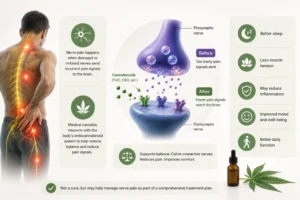
Medical cannabis works differently than traditional pain medications.
Your body contains a built-in communication network called the endocannabinoid system. Think of it as one of the body’s natural balancing systems. It helps regulate pain signals, inflammation, sleep, mood, and nerve function.
The natural compounds found in cannabis interact with receptors throughout the brain, spinal cord, and immune system.
Research suggests this interaction may help:
- Reduce abnormal nerve signaling
- Decrease pain perception
- Calm overactive pain pathways
- Improve sleep quality
- Reduce muscle tension
- Support overall comfort
Rather than simply masking pain, cannabinoids appear to influence how the nervous system processes pain signals.
What Does the Research Say?
Neuropathic pain is one of the most extensively studied conditions for medical cannabis.
Clinical studies have found that cannabis-based therapies may provide meaningful pain relief for some patients with chronic neuropathic pain, particularly when conventional treatments have been insufficient.
Research has also suggested potential improvements in:
- Pain intensity
- Sleep quality
- Daily functioning
- Overall quality of life
Not every patient responds the same way. Some experience substantial improvement, while others notice only modest benefits. Finding the right product, dose, and cannabinoid balance often takes time.
Which Types of Nerve Pain May Benefit?
Medical cannabis has been studied in several neuropathic conditions.
These include:
Diabetic Neuropathy
Diabetes can damage the small nerves in the feet and legs, causing burning pain, numbness, and tingling.
Some patients report improved comfort and better sleep with carefully dosed medical cannabis.
Chemotherapy-Induced Peripheral Neuropathy
Cancer treatments can injure peripheral nerves, leaving patients with persistent pain and numbness.
Emerging research suggests cannabinoids may help reduce symptoms in selected patients, although additional studies are ongoing.
Multiple Sclerosis
Many people with MS experience nerve pain along with muscle spasms.
Cannabis may help address both symptoms simultaneously, potentially improving mobility and sleep.
Postherpetic Neuralgia
After shingles resolves, damaged nerves can continue producing severe pain for months or even years.
Cannabis-based therapies have shown promise as an adjunctive treatment in some patients.
Sciatica and Spinal Nerve Compression
When spinal nerves become compressed, patients may experience shooting pain traveling into the arms or legs.
While cannabis won’t correct the underlying structural problem, it may help reduce pain and improve daily function.
THC and Nerve Pain
THC is the primary psychoactive cannabinoid found in cannabis.
Research suggests THC may help:
- Reduce neuropathic pain
- Improve sleep
- Decrease muscle spasms
- Reduce pain intensity
Higher doses, however, may increase unwanted effects such as:
- Dizziness
- Anxiety
- Impaired concentration
- Dry mouth
Many patients achieve better results by starting with a low dose and increasing gradually under medical supervision.
CBD and Neuropathy
CBD is non-intoxicating and works differently than THC.
Although CBD alone may not provide the same degree of pain relief for severe neuropathy, it may offer several potential benefits.
Patients often use CBD to help:
- Reduce inflammation
- Ease anxiety associated with chronic pain
- Improve relaxation
- Balance some of THC’s side effects
Many medical cannabis products combine both THC and CBD to provide complementary effects.
Other Cannabinoids That May Help
Researchers continue discovering additional cannabinoids that may contribute to pain management.
These include:
- CBG, which may have anti-inflammatory and neuroprotective properties
- CBC, which may influence pain signaling
- CBN, which some patients use primarily for nighttime symptom relief
Although research is still developing, full-spectrum cannabis products may provide benefits through the combined action of multiple cannabinoids and aromatic compounds called terpenes.
Which Terpenes May Support Neuropathy?
Terpenes are natural compounds that give cannabis its distinctive aroma.
Some terpenes may also influence how cannabis affects the body.
Patients with nerve pain often seek products containing:
- Myrcene for relaxation
- Beta-caryophyllene for potential anti-inflammatory effects
- Linalool for calming properties
- Pinene for mental clarity
- Humulene for additional anti-inflammatory support
Research into terpene effects continues to grow, but much remains to be learned.
Choosing the Right Medical Cannabis Product

The “best” product depends on your symptoms, schedule, and previous cannabis experience.
Common options include:
Oils and Tinctures
- Easy to adjust dosage
- Long-lasting effects
- Good for daily symptom management
Edibles
- Longer duration
- Helpful for overnight pain relief
- Slower onset
Vaporized Products
- Faster symptom relief
- Useful for breakthrough pain
- Shorter duration
Topicals
Creams and balms may help localized discomfort for some patients, although they generally do not reach deeper nerves involved in widespread neuropathy.
Suggested Reading: The Best Strains for Nerve Pain
What Are the Potential Side Effects?
Medical cannabis is generally well tolerated when used appropriately, but side effects can occur.
Possible side effects include:
- Dry mouth
- Dry eyes
- Dizziness
- Drowsiness
- Temporary impairment in concentration
- Increased appetite
- Faster heart rate
These effects are usually dose-dependent and often improve with careful dose adjustments.
Tips for First-Time Patients
If you’re considering medical marijuana for nerve pain:
- Start with a low dose.
- Increase slowly.
- Give each dosage several days before making changes.
- Keep a symptom journal.
- Monitor both pain relief and side effects.
- Work closely with a knowledgeable medical cannabis clinician.
Finding the right treatment often requires patience.
Can Medical Cannabis Replace Other Pain Medications?
For some patients, cannabis becomes an important addition to their pain management plan.
Others may find that successful symptom control allows them, under physician supervision, to reduce certain medications over time. However, patients should never stop prescription medications without consulting the healthcare professional managing their treatment.
Medical cannabis is best viewed as one component of a comprehensive treatment strategy that may also include:
- Physical therapy
- Exercise
- Weight management
- Good sleep habits
- Nutrition
- Stress reduction
- Treatment of the underlying medical condition
Frequently Asked Questions
Can medical cannabis cure neuropathy?
No. Medical cannabis does not repair damaged nerves or cure the underlying cause of neuropathy. However, research suggests it may help reduce pain and improve quality of life in some patients.
Which cannabinoid is best for nerve pain?
Many patients benefit from products containing both THC and CBD. THC appears to play a larger role in pain relief, while CBD may complement THC by supporting relaxation and reducing inflammation. The ideal balance varies from person to person.
Is medical cannabis better than gabapentin?
They work through different mechanisms. Some patients respond better to one treatment than the other, while others use both together under medical supervision. Treatment decisions should always be individualized.
Can cannabis help diabetic neuropathy?
Research suggests medical cannabis may reduce pain associated with diabetic neuropathy in some patients, although it does not reverse nerve damage caused by diabetes.
How long does it take to work?
This depends on the product. Vaporized cannabis may begin working within minutes, while oils and edibles typically take longer but often provide longer-lasting relief.
The Bottom Line

Living with chronic nerve pain can be physically exhausting and emotionally draining. When standard treatments don’t provide enough relief, it’s understandable to look for additional options.
Current research suggests that medical cannabis may help some patients with neuropathy by reducing pain intensity, improving sleep, calming overactive nerve signaling, and supporting overall quality of life. While it isn’t a cure for nerve damage, many patients find it becomes a valuable part of a broader pain management strategy.
If you’re considering medical marijuana for nerve pain, consult a healthcare provider experienced in cannabis medicine. A personalized treatment plan can help identify the most appropriate product, dosage, and approach for your specific condition and goals.
Medical Disclaimer: This article is for educational purposes only and should not be considered medical advice. Medical cannabis may not be appropriate for everyone. Always consult a qualified healthcare professional before starting, stopping, or changing any treatment, and never discontinue prescribed medications without your provider’s guidance.

Dr. Marsh, is a board-certified anesthesiologist with over 37 years of healthcare experience. A graduate of Syracuse University, the New York College of Osteopathic Medicine, and Rutgers University Medical School, he has earned recognition from FindaTopDoc.com for clinical excellence. Dr. Marsh founded ReThink-Rx in 2021, where he now focuses on educating, supporting, and certifying patients for medical cannabis.