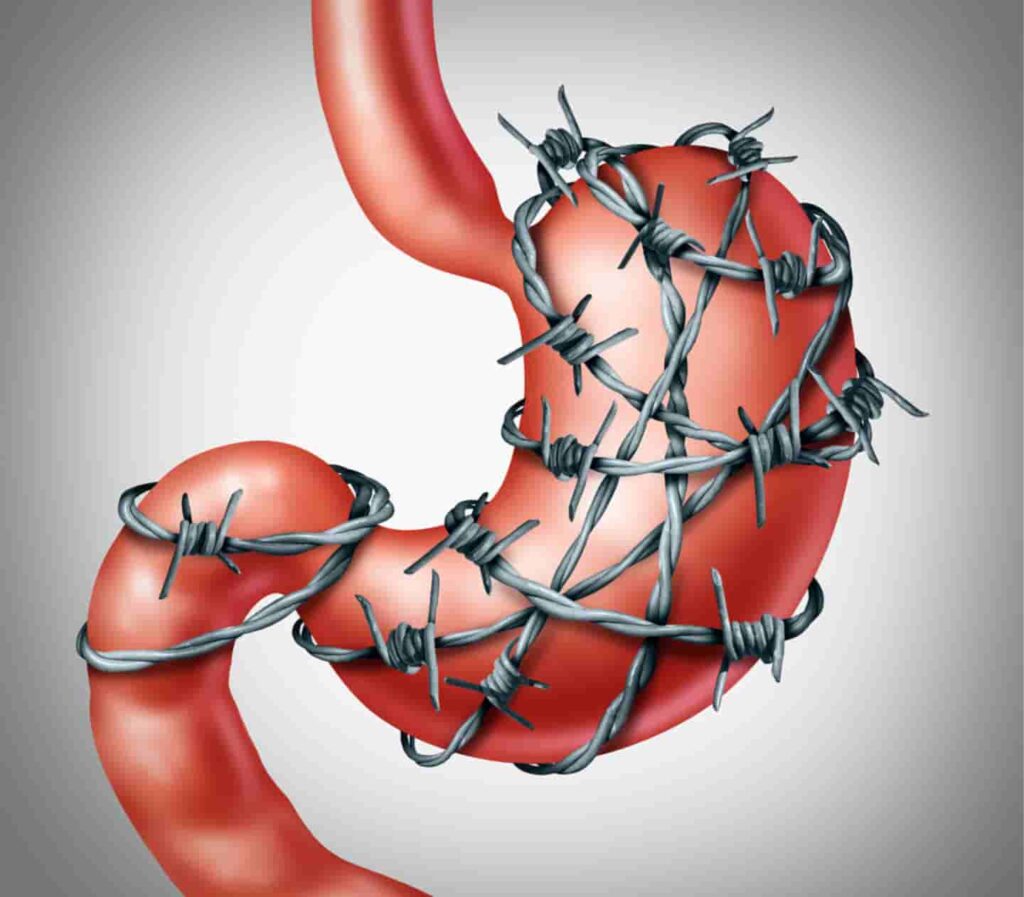
Chronic pain affects millions of Americans and remains one of the most common reasons people seek a medical marijuana certification. Whether the pain comes from arthritis, nerve damage, back injuries, multiple sclerosis, or another chronic condition, many patients are looking for alternatives to traditional medications. One of the most common questions we hear at ReThink-Rx is, “How does THC actually relieve pain?”
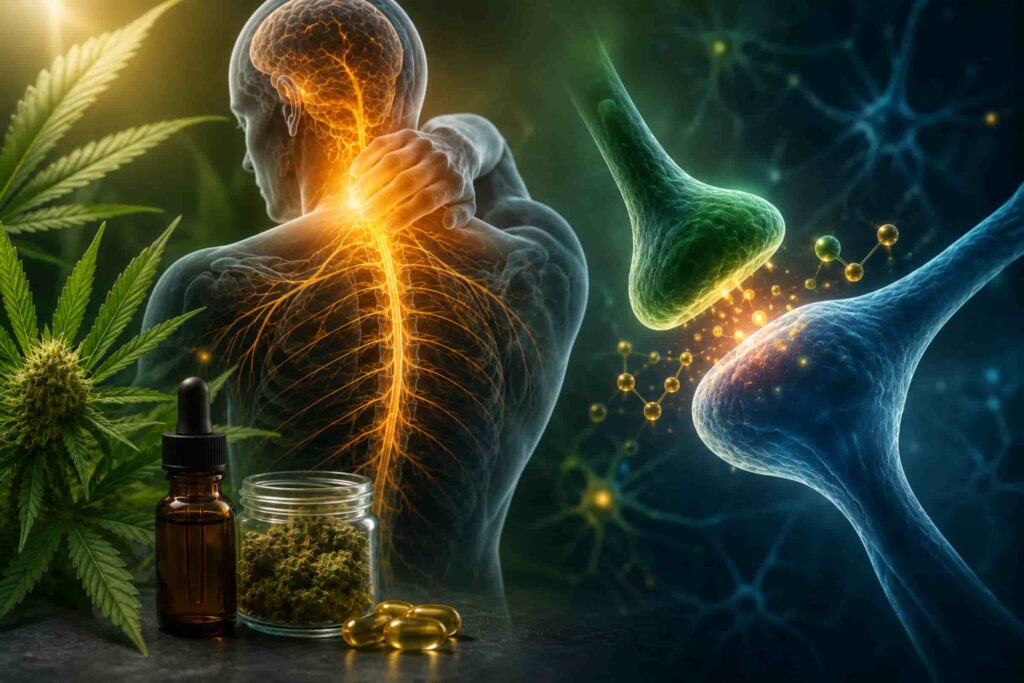
The answer lies in a remarkable biological system that most people have never heard of—the endocannabinoid system (ECS). This complex network of receptors helps regulate pain, inflammation, mood, sleep, memory, and immune function. THC, the primary psychoactive cannabinoid found in cannabis, interacts directly with this system to reduce pain in several different ways.
Understanding how THC works can help patients make informed decisions about medical cannabis and why it may be an effective option for chronic pain management.
What Is THC?
THC, or tetrahydrocannabinol, is one of more than one hundred naturally occurring cannabinoids produced by the cannabis plant. It is best known for producing the “high” associated with marijuana, but its medical effects extend far beyond altered perception.
Researchers have discovered that THC can help reduce:
For many medical cannabis patients, pain relief is the primary reason they seek treatment.
The Endocannabinoid System: Your Body’s Natural Pain Control Network
Scientists didn’t discover why THC works until the 1990s, when they identified the endocannabinoid system (ECS).
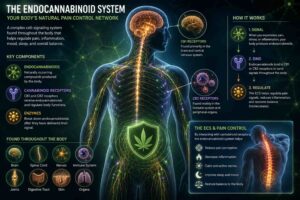
The ECS is a communication network found throughout the body, including the:
- Brain
- Spinal cord
- Peripheral nerves
- Immune system
- Joints
- Skin
- Digestive tract
Its job is to help maintain balance—or homeostasis—throughout the body.
When you experience pain or inflammation, the ECS becomes active and releases naturally occurring cannabinoids called endocannabinoids. These molecules bind to cannabinoid receptors and help regulate pain signals.
THC works because its chemical structure closely resembles these naturally occurring compounds.
How THC Blocks Pain Signals
One of THC’s most important actions is its ability to bind to CB1 receptors, which are found primarily in the brain and spinal cord.
When THC activates these receptors, it changes the way pain signals travel through the nervous system.
Instead of eliminating the source of pain, THC reduces the intensity of the signals reaching the brain. As a result, patients often report that pain feels less severe, less distracting, and easier to tolerate.
This mechanism is particularly helpful for conditions involving:
- Neuropathy
- Sciatica
- Spinal cord injuries
- Multiple sclerosis
- Complex Regional Pain Syndrome (CRPS)
These conditions often respond poorly to traditional pain medications but may improve with carefully dosed medical cannabis.
THC Helps Calm Inflammation
Pain is often caused not only by injured nerves but also by inflammation.
When tissues become inflamed, immune cells release chemicals that sensitize nearby nerves, making them transmit stronger pain signals.
THC can help reduce this inflammatory response by interacting with cannabinoid receptors found on immune cells.
By decreasing inflammatory activity, THC may help relieve pain associated with:
- Arthritis
- Autoimmune disorders
- Tendon injuries
- Joint pain
- Muscle injuries
This is one reason many patients experience improvement even when their pain has both inflammatory and nerve-related components.
THC Changes How the Brain Processes Pain
Pain isn’t simply a message traveling from an injured body part to the brain.
The brain interprets every pain signal based on emotional state, stress level, fatigue, previous experiences, and overall health.
THC influences several brain regions involved in pain processing, including those responsible for emotion and perception.
Many patients describe the difference this way:
“The pain is still there, but it doesn’t bother me nearly as much.”
This altered perception can make chronic pain far less disruptive without completely eliminating normal protective sensations.
Better Sleep Means Better Pain Control
Pain and poor sleep often create a frustrating cycle.
Pain makes it difficult to sleep.
Poor sleep makes pain worse.
Many patients report that one of the biggest benefits of THC is improved sleep quality.
By helping patients fall asleep faster and remain asleep longer, THC may allow the body to recover more effectively overnight.
Better sleep has been associated with:
- Lower pain sensitivity
- Improved mood
- Better physical recovery
- Increased daytime energy
- Enhanced quality of life
For many chronic pain patients, this indirect benefit is just as valuable as THC’s direct effects on pain.
Does THC Work Better With CBD?
In many cases, yes.
CBD (cannabidiol) works differently from THC.
Unlike THC, CBD does not produce intoxication and has relatively little direct activity at CB1 receptors.
Instead, CBD helps regulate inflammation, supports nerve health, and may reduce anxiety.
When THC and CBD are used together, they often produce what researchers call the entourage effect.
The two cannabinoids—and other natural compounds called terpenes—appear to work together, producing greater therapeutic effects than either compound alone.
Many patients achieve excellent results using balanced THC products that maximize pain relief while minimizing unwanted side effects.
Can THC Replace Opioids?
Not always—but for some patients, it may reduce the need for opioid medications.
Several studies have found that patients using medical cannabis often report lower opioid use while maintaining acceptable pain control.
This doesn’t mean patients should stop opioid medications on their own.
Instead, any medication adjustments should be supervised by a healthcare professional.
For many individuals, medical cannabis becomes one part of a comprehensive pain management strategy that may include physical therapy, exercise, weight management, and other treatments.
Is THC Right for Everyone?
Like any medical treatment, medical cannabis may not be appropriate for every patient.
Some people experience side effects such as:
- Dry mouth
- Dizziness
- Fatigue
- Temporary impairment
- Anxiety at high doses
Finding the right dose is important.
Medical cannabis follows the principle of “start low and go slow.” Many patients achieve meaningful pain relief with surprisingly small amounts of THC, particularly when combined with CBD.
Working with an experienced medical cannabis physician can help identify the most appropriate product, cannabinoid ratio, and dosing schedule.
Why Physician Guidance Matters
Not all cannabis products are alike. Different strains, cannabinoid concentrations, terpene profiles, and delivery methods can produce dramatically different effects.
At ReThink-Rx, we educate patients on:
- Choosing appropriate THC and CBD ratios
- Understanding available dispensary products
- Safe dosing strategies
- Managing potential side effects
- Finding products that best match their symptoms and lifestyle
Our goal is not simply to certify patients—it is to help them use medical cannabis safely, effectively, and responsibly.
Final Thoughts
THC relieves pain through several complementary mechanisms. It helps reduce pain signals traveling through the nervous system, decrease inflammation, change how the brain processes pain, improve sleep, and may work even better when combined with CBD.
For many patients living with chronic pain, these combined effects provide meaningful relief that allows them to return to work, enjoy hobbies, sleep better, and improve their overall quality of life.
If you are struggling with chronic pain and would like to learn whether medical cannabis may be appropriate for you, the physicians at ReThink-Rx are here to help. Through convenient telehealth appointments, we provide personalized evaluations and ongoing guidance to help you make informed decisions about your treatment.
Disclaimer: This article is for educational purposes only and is not a substitute for professional medical advice, diagnosis, or treatment. Always consult a qualified healthcare provider with any questions about your health or medical conditions.

Dr. Marsh, is a board-certified anesthesiologist with over 37 years of healthcare experience. A graduate of Syracuse University, the New York College of Osteopathic Medicine, and Rutgers University Medical School, he has earned recognition from FindaTopDoc.com for clinical excellence. Dr. Marsh founded ReThink-Rx in 2021, where he now focuses on educating, supporting, and certifying patients for medical cannabis.