
Chronic pain and neuropathic conditions affect millions of Americans, often impacting sleep, mood, and daily functioning. Traditionally, medications like Gabapentin (Neurontin) have been prescribed for nerve-related pain, while medical marijuana has emerged as a complementary or alternative therapy for some patients. Understanding the similarities and differences, benefits, and risks of these treatments can help patients make informed decisions with guidance from a certified physician.
At ReThink-Rx, we help patients evaluate options safely and effectively, ensuring the best outcomes for pain management and overall quality of life.
Understanding Gabapentin
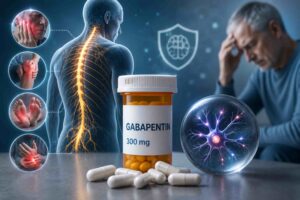
Gabapentin is a prescription medication commonly used for:
-
Neuropathic pain: Nerve-related discomfort from conditions like diabetes, shingles, or peripheral neuropathy
-
Seizure control: Often prescribed alongside other anticonvulsants
-
Off-label uses: Anxiety, restless leg syndrome, and chronic pain
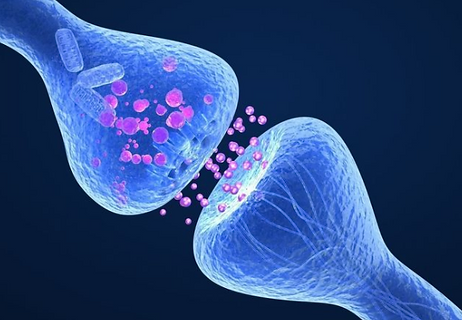
Gabapentin works by modulating nerve signals in the brain and spinal cord to reduce pain perception. While effective for many patients, it can have side effects and limitations:
-
Drowsiness or fatigue
-
Dizziness or imbalance
-
Swelling or weight gain
-
Mood changes
-
Dependence risk with long-term use
Some patients find limited relief from Gabapentin, prompting exploration of alternative therapies like medical marijuana.
How Medical Marijuana Works for Pain

Medical marijuana contains cannabinoids, primarily THC (tetrahydrocannabinol) and CBD (cannabidiol), which interact with the endocannabinoid system (ECS). The ECS helps regulate pain, inflammation, mood, and sleep, making it particularly relevant for chronic and neuropathic pain.
-
THC: Psychoactive, but also modulates pain signals and may reduce nerve-related discomfort. It can also improve sleep and mood disrupted by chronic pain.
-
CBD: Non-psychoactive and has anti-inflammatory, analgesic, and neuroprotective properties, which may support long-term pain management without cognitive effects.
Medical marijuana offers a different mechanism of action than Gabapentin, providing an alternative or adjunct for patients seeking symptom relief.
Comparing Gabapentin and Medical Marijuana
While both therapies target chronic or neuropathic pain, they differ in key ways:
| Feature | Gabapentin | Medical Marijuana |
|---|---|---|
| Mechanism | Modulates nerve signaling in the CNS | Interacts with ECS, affecting pain, inflammation, and mood |
| Onset | 1–3 hours | Varies by delivery method: inhalation (~minutes), sublingual (~15–45 mins), oral (~30–120 mins) |
| Duration | 6–12 hours per dose | Varies; oral/edible longer-lasting, inhalation short-acting |
| Side Effects | Drowsiness, dizziness, swelling, mood changes, dependence | Dry mouth, drowsiness, mild psychoactive effects (THC), possible dizziness |
| Dependency Risk | Moderate with long-term use | Low to moderate, higher with high THC or frequent use |
| Legality | Prescription medication | State-dependent; legal in Virginia for qualifying conditions |
Potential Benefits of Medical Marijuana Compared to Gabapentin
-
Alternative Mechanism for Pain Relief: Cannabis works through the ECS rather than directly on nerve channels, providing a complementary or alternative approach.
-
Multi-symptom Support: Cannabis may reduce pain, improve sleep, alleviate anxiety, and enhance mood, addressing common side effects of chronic pain.
-
Reduced Medication Burden: Some patients reduce reliance on Gabapentin when adding cannabis, potentially lowering side effect risk.
-
Personalized Therapy: Various THC:CBD ratios, delivery methods, and doses enable individualized symptom management.
Safety Considerations
Both Gabapentin and medical marijuana are generally safe when used under medical supervision, but there are important distinctions:
-
Gabapentin: Risk of sedation, dizziness, and potential dependence, especially when taken in high doses or with other CNS depressants. Abrupt discontinuation can cause withdrawal symptoms.
-
Medical Marijuana: Risk of mild cognitive or psychoactive effects (from THC), fatigue, and dizziness. Interactions with other medications are possible, especially anticoagulants or anticonvulsants. Smoking is not recommended due to lung irritation; safer options include tinctures, edibles, or topicals.
Patients should consult a physician before switching or combining therapies to ensure safety and avoid interactions.
Delivery Methods for Medical Marijuana
Effective symptom management depends on the delivery method:
-
Oral ingestion (capsules, edibles, tinctures): Long-lasting, beneficial for persistent pain; slower onset.
-
Sublingual tinctures: Rapid absorption for flare-ups; less psychoactive than inhalation.
-
Topicals: Localized relief for muscle or joint pain; minimal systemic effects.
-
Inhalation (vaporization): Fastest onset, best for acute pain episodes; avoid smoking to protect lung health.
At ReThink-Rx, we help patients select the most suitable method based on the type and severity of their pain, as well as their lifestyle.
When Cannabis May Be Preferred Over Gabapentin
Patients may explore medical cannabis if:
-
Gabapentin provides insufficient relief
-
Side effects from Gabapentin are intolerable
-
Multi-symptom relief (pain, anxiety, sleep) is desired
-
Preference for a more natural or complementary therapy
-
Desire to reduce dependency on prescription medications
Medical cannabis can be used alone or alongside Gabapentin, depending on the physician’s guidance and the patient’s response.
Legal Considerations in Virginia
Virginia allows residents with qualifying medical conditions to access medical cannabis under physician supervision. Neuropathic or chronic pain, among other conditions, may qualify. Requirements include:
-
Virginia residency
-
Documentation of a qualifying condition
-
Evaluation by a certified medical cannabis physician
Approved patients can purchase medical cannabis at state-licensed dispensaries. Working with providers like ReThink-Rx ensures legal compliance, safe dosing, and ongoing support.
Integrating Cannabis Into a Comprehensive Pain Management Plan
Medical cannabis works best as part of a broader approach to chronic pain, which may include:
-
Physical therapy: Improves strength, flexibility, and mobility
-
Stress reduction techniques: Meditation, yoga, or mindfulness can reduce pain perception
-
Sleep hygiene: Adequate rest supports recovery and pain management
-
Complementary medications: Gabapentin or other medications may still be used at lower doses in combination with cannabis
This integrated approach ensures maximum symptom relief while minimizing side effects and enhancing quality of life.
Final Thoughts
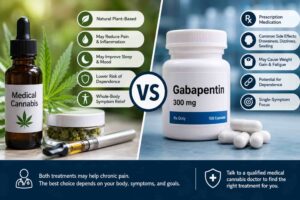
Gabapentin and medical marijuana offer distinct approaches to managing neuropathic and chronic pain. Gabapentin modulates nerve signaling in the central nervous system, while medical marijuana interacts with the endocannabinoid system, addressing pain, inflammation, and related symptoms like sleep disturbances and anxiety.
At ReThink-Rx, we guide patients in making informed choices, whether using cannabis as a primary therapy, an adjunct to Gabapentin, or a step toward reducing prescription medication reliance. Consulting a certified physician is essential for personalized dosing, safe use, and optimal outcomes.
Frequently Asked Questions About Medical Marijuana vs. Gabapentin
Is medical marijuana better than Gabapentin for nerve pain?
There is no single answer that applies to everyone. Gabapentin has long been prescribed for neuropathic pain and can be very effective for many patients. Medical marijuana may also help reduce nerve pain by interacting with the body’s endocannabinoid system. Some patients who experience inadequate relief or bothersome side effects with Gabapentin find that medical cannabis provides meaningful symptom improvement. The best treatment depends on your medical condition, symptoms, and overall health.
Can I take medical marijuana and Gabapentin together?
In some cases, yes. Many patients use medical cannabis alongside Gabapentin under the supervision of a qualified healthcare provider. Because both treatments can cause drowsiness or dizziness, doses should be carefully adjusted and monitored to minimize side effects.
Does medical marijuana have fewer side effects than Gabapentin?
Both medications have potential side effects, but they differ. Gabapentin commonly causes drowsiness, dizziness, swelling, weight gain, and balance problems. Medical marijuana may cause dry mouth, fatigue, dizziness, or temporary psychoactive effects, depending on the THC content. Many patients find that carefully selected cannabis products—especially those containing CBD—are well tolerated when used appropriately.
Can medical marijuana replace Gabapentin?
Some patients are able to reduce or even discontinue Gabapentin with their physician’s guidance after beginning medical cannabis therapy. However, Gabapentin should never be stopped abruptly because doing so can lead to withdrawal symptoms or, in some individuals, seizures. Any medication changes should be supervised by your healthcare provider.
Which is better for neuropathy: Gabapentin or medical cannabis?
Both treatments may help neuropathic pain, but they work differently. Gabapentin changes how nerves transmit pain signals, while cannabinoids such as THC and CBD influence the body’s endocannabinoid system to help regulate pain, inflammation, and nerve activity. Some patients respond better to one treatment, while others benefit from using both together.
Is CBD as effective as Gabapentin?
CBD and Gabapentin have different mechanisms of action. CBD may help reduce inflammation, improve sleep, and lessen chronic pain without causing intoxication. Gabapentin has more extensive research supporting its use for specific neuropathic pain conditions. In many cases, a balanced medical cannabis product containing both CBD and THC provides greater symptom relief than CBD alone.
Is medical marijuana safer than Gabapentin?
Both therapies are generally considered safe when used appropriately under medical supervision. Medical cannabis has a lower risk of fatal overdose than opioids and does not typically produce the physical dependence associated with some prescription medications. However, THC-containing products can temporarily impair judgment and coordination, while Gabapentin can increase the risk of falls, particularly in older adults. Your healthcare provider can help determine which option is safest for your situation.
What medical conditions may benefit from medical marijuana instead of Gabapentin?
Medical cannabis may be appropriate for patients experiencing:
- Chronic nerve pain
- Peripheral neuropathy
- Complex Regional Pain Syndrome (CRPS)
- Fibromyalgia
- Multiple sclerosis-related pain or spasticity
- Chronic back or neck pain
- Sleep disturbances associated with chronic pain
- Certain anxiety disorders that accompany chronic pain
Many patients also appreciate that medical cannabis may address several symptoms simultaneously, including pain, sleep disruption, muscle spasms, and stress.
What type of medical marijuana works best for chronic nerve pain?
The ideal product depends on your symptoms and treatment goals. Many patients benefit from balanced THC:CBD products or CBD-rich formulations during the day, while products with slightly higher THC concentrations may be more helpful in the evening when pain interferes with sleep. A medical cannabis physician can recommend the most appropriate product, dose, and delivery method for your individual needs.
How can I get a medical marijuana certification in Virginia?
Virginia residents with qualifying medical conditions can receive a medical cannabis certification through a licensed medical cannabis practitioner. At ReThink-Rx, patients can complete their evaluation through a convenient telehealth appointment. Once certified, patients may legally purchase medical cannabis products from licensed Virginia dispensaries and receive ongoing guidance to help them find the most effective treatment for their symptoms.
Disclaimer: This article is for educational purposes only. It is not intended as medical advice; consult a qualified healthcare provider before starting or changing any treatment.

Dr. Marsh, is a board-certified anesthesiologist with over 37 years of healthcare experience. A graduate of Syracuse University, the New York College of Osteopathic Medicine, and Rutgers University Medical School, he has earned recognition from FindaTopDoc.com for clinical excellence. Dr. Marsh founded ReThink-Rx in 2021, where he now focuses on educating, supporting, and certifying patients for medical cannabis.