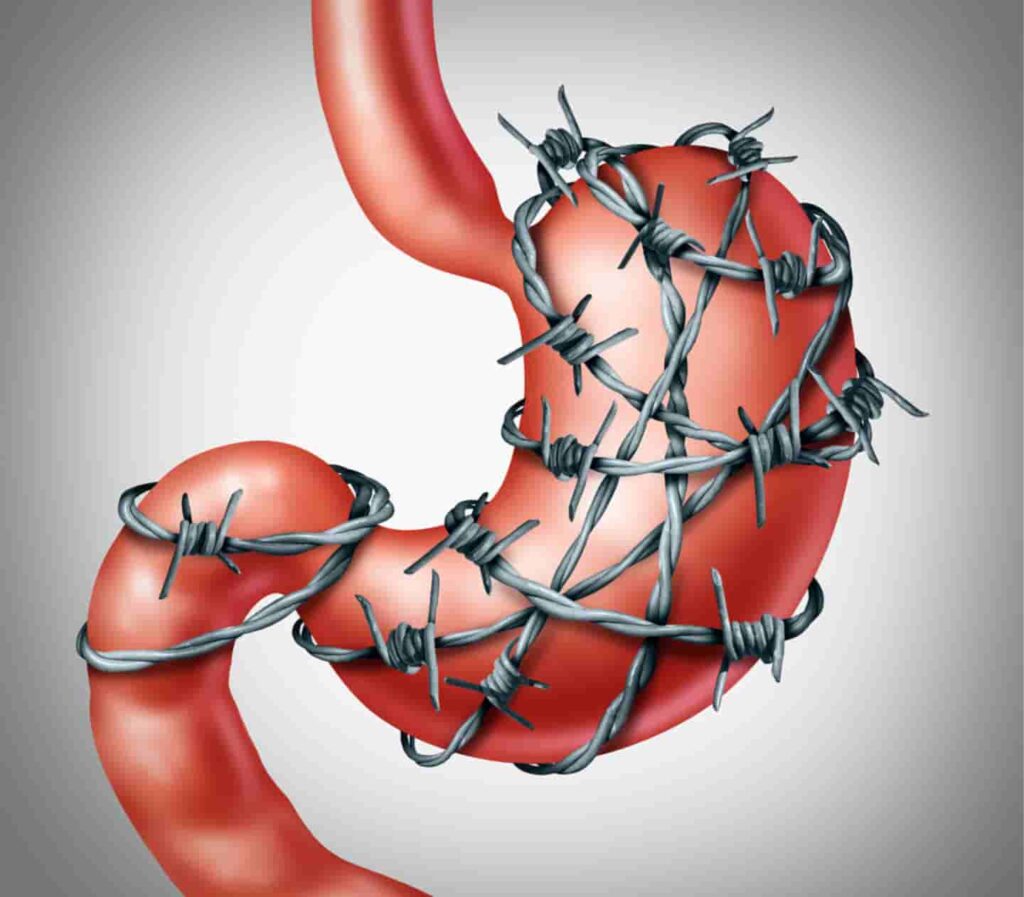

Living with ankylosing spondylitis can feel like fighting your own body every day. The pain, stiffness, fatigue, and inflammation can slowly interfere with work, sleep, exercise, and even simple daily activities. For many patients, traditional medications provide only partial relief or come with unwanted side effects. That is one reason more people with chronic inflammatory conditions are exploring medical cannabis as part of their treatment plan.
At ReThink-Rx, patients frequently ask whether medical marijuana may help symptoms associated with ankylosing spondylitis. While cannabis is not considered a cure for the disease, growing evidence suggests it may help some patients better manage pain, muscle tension, sleep problems, and quality of life.
What Is Ankylosing Spondylitis?

Ankylosing Spondylitis is a chronic autoimmune inflammatory disease that primarily affects the spine and sacroiliac joints. Over time, inflammation can lead to pain, stiffness, reduced flexibility, and even vertebral fusion in severe cases.
The condition is considered a form of inflammatory arthritis and often begins in early adulthood. Symptoms usually develop gradually and may worsen over time without proper treatment.
Common symptoms include:
- Chronic lower back pain
- Morning stiffness
- Neck pain
- Hip or shoulder discomfort
- Fatigue
- Muscle tightness
- Reduced spinal flexibility
- Sleep disturbances
- Pain that improves with movement but worsens with rest
Some patients also experience inflammation outside the spine, including eye inflammation, bowel problems, and joint pain in other areas of the body.
Why Ankylosing Spondylitis Can Be Difficult to Treat
Most conventional treatment plans for ankylosing spondylitis focus on reducing inflammation and preserving mobility. Patients are commonly prescribed:
- NSAIDs such as ibuprofen or naproxen
- Steroids
- Biologic medications
- Immunosuppressants
- Physical therapy
- Muscle relaxers
- Pain medications
While many of these treatments can be effective, they may also create challenges. NSAIDs can irritate the stomach and kidneys. Steroids may contribute to weight gain, blood sugar issues, and bone loss. Biologic medications can suppress the immune system and increase the risk of infection.
Some patients continue to experience pain and stiffness despite aggressive medical therapy. Others simply want to reduce reliance on opioids or sedating medications. This has led many individuals to investigate medical cannabis as a complementary option.
How Medical Cannabis May Help Ankylosing Spondylitis
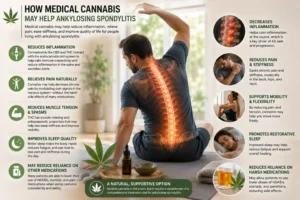
The human body contains a complex network called the endocannabinoid system. This system helps regulate pain perception, inflammation, immune signaling, sleep, mood, and muscle function.
Cannabis contains active compounds called cannabinoids, including THC and CBD, which interact with this system.
THC and Pain Relief
Tetrahydrocannabinol, commonly called THC, is the primary psychoactive component in cannabis. It may help reduce pain signaling and muscle tension while also improving sleep quality in some patients.
Patients with ankylosing spondylitis often describe deep inflammatory pain combined with muscle guarding and stiffness. THC may help address both issues simultaneously.
Some patients also report that THC helps them relax enough to perform stretching exercises or physical therapy more comfortably.
CBD and Inflammation
Cannabidiol (CBD) is non-intoxicating and has become increasingly popular among patients seeking symptom relief without the burden of significant psychoactive effects.
CBD may help:
- Reduce inflammation
- Ease anxiety associated with chronic pain
- Improve sleep
- Support recovery after physical activity
- Reduce muscle tension
Many medical cannabis products combine THC and CBD together because the compounds often work better in combination than when used individually. This phenomenon is sometimes called the “entourage effect.”
Medical Marijuana and Chronic Pain
Chronic pain remains one of the most common reasons patients seek medical cannabis certification. Ankylosing spondylitis can produce multiple forms of pain simultaneously, including:
- Inflammatory pain
- Mechanical pain
- Muscle spasms
- Nerve irritation
- Sleep-related pain amplification
Cannabis may help patients manage several of these overlapping symptoms at once. Some individuals report that cannabis helps them sleep more deeply, which can indirectly reduce pain sensitivity and improve daytime function.
Patients frequently describe improved quality of life even when their pain is not completely eliminated.
Can Medical Cannabis Reduce Inflammation?
This remains an area of active research. Some laboratory and animal studies suggest cannabinoids may influence inflammatory pathways and immune activity. However, researchers are still working to determine how these effects translate into long-term treatment for autoimmune diseases in humans.
Most physicians currently view medical cannabis as a symptom-management tool rather than a disease-modifying treatment for ankylosing spondylitis.
In other words, cannabis may help patients feel and function better, but it should not replace ongoing medical care from a rheumatologist.
Sleep Problems and Ankylosing Spondylitis
Many patients with ankylosing spondylitis struggle with sleep disruption. Pain and stiffness often worsen at night or during prolonged inactivity. Poor sleep can then increase sensitivity to inflammation, fatigue, and pain perception the following day.
Certain cannabis formulations may help some patients:
- Fall asleep faster
- Stay asleep longer
- Wake up less frequently due to pain
- Experience improved nighttime comfort
Improved sleep quality can sometimes lead to meaningful improvements in overall well-being and daytime functioning.
Choosing the Right Medical Cannabis Products
Not all cannabis products are the same. Different formulations may create very different effects.
Common medical cannabis options include:
- Vaporized products
- Tinctures
- Capsules
- Edibles
- Topicals
- Oral concentrates
For inflammatory conditions like ankylosing spondylitis, many patients prefer longer-acting products that provide steady symptom control.
CBD-dominant products may work well during daytime hours when patients want symptom relief with minimal intoxication. THC-containing products are often used in the evening to help manage pain and support sleep.
Finding the right balance often requires individualized guidance and careful dose adjustment. Read more HERE.
Potential Risks and Side Effects
Like any treatment, cannabis is not appropriate for every patient.
Potential side effects may include:
- Dizziness
- Dry mouth
- Sedation
- Impaired coordination
- Increased heart rate
- Anxiety at high THC doses
- Cognitive impairment
Patients should also be cautious about driving or operating machinery after using THC-containing products.
Medical cannabis may interact with certain prescription medications, so it is important to discuss treatment with a qualified healthcare provider familiar with cannabis medicine.
Why Professional Guidance Matters
Many patients attempt to self-medicate using products purchased from friends, smoke shops, or unregulated online sources. Unfortunately, this can lead to inconsistent dosing, poor product quality, contamination risks, or unpleasant side effects.
Working with an experienced medical cannabis provider can help patients:
- Choose appropriate formulations
- Understand THC versus CBD
- Avoid overconsumption
- Reduce unwanted side effects
- Create a personalized treatment strategy
- Stay compliant with state laws
At ReThink-Rx, the focus is not simply on approving cannabis cards. The practice emphasizes patient education, safety, and individualized support for chronic medical conditions.
Is Ankylosing Spondylitis a Qualifying Condition for Medical Marijuana?
In Virginia, any condition will qualify if, in the opinion of the healthcare provider, it might be improved by cannabis therapy. The chronic pain and inflammatory condition of AS will likely qualify patients for medical cannabis certification. Patients with documented chronic pain, arthritis-related symptoms, or autoimmune inflammatory disorders may be eligible.
An online medical cannabis evaluation with ReThink-Rx allows patients to discuss symptoms, prior treatments, and therapeutic goals with a knowledgeable physician.
The Future of Cannabis and Autoimmune Disease
Research into medical cannabis and autoimmune disease continues to expand rapidly. Scientists are actively investigating how cannabinoids influence inflammation, immune signaling, and chronic pain pathways.
While more large-scale clinical studies are still needed, many patients with ankylosing spondylitis already report meaningful improvements in comfort, sleep, mobility, and quality of life with carefully managed cannabis therapy.
As understanding of the endocannabinoid system continues to evolve, medical cannabis may become an increasingly important part of integrative treatment strategies for chronic inflammatory conditions.
Final Thoughts
Ankylosing spondylitis can be physically and emotionally exhausting. Chronic pain, stiffness, fatigue, and sleep disruption often affect nearly every aspect of life. Although traditional therapies remain important, medical cannabis may provide additional support for patients seeking better symptom control and improved daily functioning.
Cannabis is not a cure for ankylosing spondylitis, but it may help some patients reduce discomfort, sleep more comfortably, and regain a greater sense of normalcy.
Patients considering medical marijuana should seek guidance from qualified professionals who understand both cannabis medicine and chronic inflammatory disease management.
At ReThink-Rx, patients receive compassionate, evidence-based support designed to help them safely explore whether medical cannabis may fit into their overall wellness plan.
Disclaimer: This article is for educational purposes only and is not a substitute for professional medical advice, diagnosis, or treatment. Always consult a qualified healthcare provider with any questions about your health or medical conditions.

Dr. Marsh, is a board-certified anesthesiologist with over 37 years of healthcare experience. A graduate of Syracuse University, the New York College of Osteopathic Medicine, and Rutgers University Medical School, he has earned recognition from FindaTopDoc.com for clinical excellence. Dr. Marsh founded ReThink-Rx in 2021, where he now focuses on educating, supporting, and certifying patients for medical cannabis.