
Migraines are far more than “just a bad headache.” For many, they are disabling neurological events that can ruin an entire day—or several. The intense throbbing pain, nausea, light sensitivity, and cognitive fog can make work, social life, and everyday routines nearly impossible. While many treatments exist, not every patient experiences reliable relief, and medications often have side effects or limited efficacy.
Because of this, more patients are turning to medical marijuana as a potential option for migraine management. As a medical cannabis physician, I’ve seen firsthand how cannabis can help reduce migraine frequency, ease symptoms, and improve overall quality of life for the right patients.
This article explains how migraines work, how cannabis may help, what the science says, and how patients can safely and responsibly explore medical marijuana as part of their migraine treatment plan.
Understanding Migraines

Migraines are a type of neurological disorder characterized by abnormal brain activity, changes in blood vessels, and inflammatory responses. They often appear with symptoms such as:
- Throbbing or pulsating pain, usually on one side of the head
- Nausea or vomiting
- Sensitivity to light, sound, or smell
- Visual disturbances or aura
- Fatigue and brain fog
-
Tingling or numbness
Triggers differ from person to person, but common ones include hormonal changes, stress, certain foods, sleep disruption, alcohol, weather changes, and sensory overload.
Traditional treatments range from over-the-counter pain relievers to prescription triptans, anti-nausea medications, anti-seizure drugs, beta-blockers, and monoclonal antibody injections. While these can be helpful, they don’t work for everyone, and some patients experience side effects or diminishing efficacy over time.
Because of these limitations, patients increasingly ask whether medical marijuana could offer a safer, more natural alternative—or at least an additional tool—to manage their migraines.
Why Cannabis May Help With Migraines
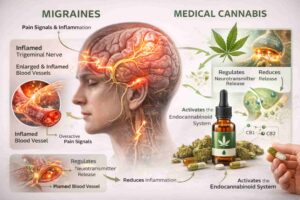
Cannabis contains therapeutic compounds called cannabinoids, with THC and CBD being the most well-known. These interact with the body’s endocannabinoid system (ECS), which helps regulate pain, inflammation, stress, blood vessel tone, and neurological signaling—factors that play significant roles in migraine development.
Medical marijuana may help with migraines through several mechanisms:
1. Reducing Pain Signals
THC activates cannabinoid receptors that modulate how pain is processed in the brain and nervous system. This can help:
- Lower the intensity of migraine pain
- Make symptoms more manageable
-
Reduce the need for more potent medications
For many patients, cannabis can stop a migraine already in progress.
2. Reducing Inflammation
Inflammation of blood vessels and nerves contributes to migraine severity. Both THC and CBD have anti-inflammatory properties that may help calm this response.
3. Preventing Migraine Onset
Some patients report fewer migraines overall when using cannabis in low, regular doses. This preventative effect may come from:
- Stabilizing serotonin levels
- Regulating stress responses
- Improving sleep
-
Reducing muscle tension and jaw clenching
4. Relieving Nausea and Vomiting
THC is well known for its potent antiemetic effects. For migraine sufferers who struggle to keep oral medications down, inhaled cannabis can be beneficial.
5. Easing Associated Anxiety and Tension
Stress is one of the most common migraine triggers. Cannabis can help relax the body, improve mood, and reduce anxiety—assisting patients to stay ahead of migraine patterns.
What the Research Shows
Research on medical cannabis for migraines has grown significantly over the past decade. While more studies are still needed, current evidence is promising:
- Patients using cannabis report fewer migraine attacks and reduced severity.
- Some studies found cannabis to be as effective—or even more effective—than prescription migraine medications for some patients.
- Inhaled forms tend to work fastest for acute attacks.
-
Cannabis may help patients reduce their use of opioids or triptans.
Overall, the trend is clear: for many patients, cannabis can be a valuable addition to a migraine treatment plan.
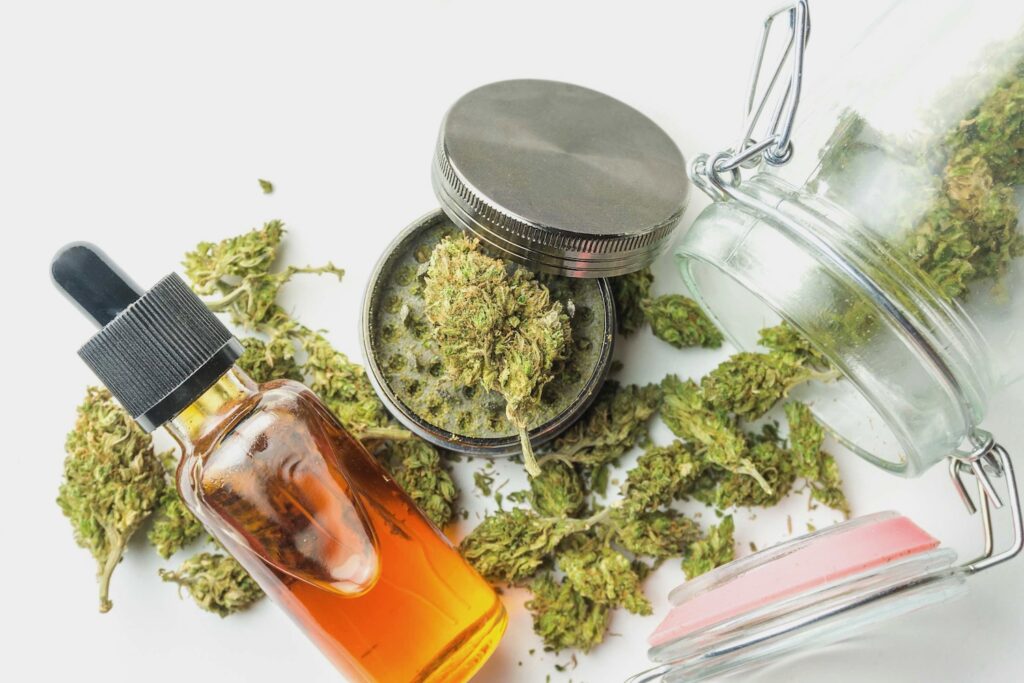
Methods of Using Cannabis for Migraines

Different cannabis consumption methods can play various roles in migraine treatment. Patients often choose one option for prevention and another for treating attacks when they happen.
1. Inhalation (Vaping or Smoking)
- Fastest relief—often within minutes
- Helpful in stopping migraines early
-
Keeps dosing flexible
Vaping is generally preferred over smoking because it produces fewer respiratory irritants.
2. Tinctures and Sublingual Drops
- Take effect in 10–20 minutes
- Easy to measure and adjust
-
Helpful for both prevention and relief
These offer a quicker onset than edibles without the intensity of inhalation.
3. Edibles
- Longer-lasting relief (4–8 hours)
- Help with nighttime migraines or sleep disturbance
-
Helpful for patients who don’t want to inhale cannabis
However, because edibles take up to two hours to take effect, they aren’t ideal for stopping a migraine that’s already underway.
4. CBD-Focused Products
- Non-intoxicating
- Can help reduce inflammation, stress, and muscle tension
-
Works well for patients who want symptom relief without feeling “high.”
Many patients benefit from combining CBD with low doses of THC for a balanced effect.
Finding the Right Dose
Migraine-focused cannabis therapy usually follows the principle of “start low and go slow.” Patients begin with very small doses, increasing gradually until they find the minimum amount that provides relief.
Low-dose THC and moderate CBD are often effective, especially for prevention. For acute attacks, slightly higher THC may be needed—but patients should still stay within comfortable limits.
Working with a medical cannabis clinician helps ensure safe, effective, and personalized dosing.
Possible Side Effects
While medical marijuana is considered safe for most adults, some patients may experience temporary side effects such as:
- Mild dizziness
- Dry mouth
- Fatigue
- Red eyes
- Short-term memory changes
-
Anxiety with overly high doses of THC
Starting with small doses and choosing balanced THC-CBD products usually prevents most of these issues.
Who Might Benefit Most?

Patients who may find medical cannabis especially helpful include those who:
- Experience frequent or chronic migraines
- Cannot tolerate prescription migraine medications
- Have nausea that prevents them from taking oral drugs
- Also deal with anxiety, sleep problems, or muscle tension
-
Want a more natural therapy with fewer side effects
Of course, cannabis is not a cure, and not every patient responds the same way. But for many, it offers meaningful relief.
When to Avoid Cannabis
Cannabis may not be appropriate for:
- Pregnant or breastfeeding individuals
- Patients with active psychosis
- People with certain heart conditions
-
Individuals under 21 (unless under supervised medical care)
A medical evaluation can help determine whether cannabis is a safe option for you.
The Bottom Line
Migraines can take a tremendous toll on daily life, and traditional treatments don’t work for everyone. Medical marijuana offers another path—one that may reduce migraine frequency, ease symptoms, and improve quality of life for many patients.
By understanding how cannabis interacts with the body, choosing the right products, and working with a knowledgeable medical professional, patients can explore this therapy safely and effectively.
Disclaimer: This article is for educational purposes only and is not a substitute for professional medical advice, diagnosis, or treatment. Always consult a qualified healthcare provider with any questions about your health or medical conditions.

Dr. Marsh, is a board-certified anesthesiologist with over 37 years of healthcare experience. A graduate of Syracuse University, the New York College of Osteopathic Medicine, and Rutgers University Medical School, he has earned recognition from FindaTopDoc.com for clinical excellence. Dr. Marsh founded ReThink-Rx in 2021, where he now focuses on educating, supporting, and certifying patients for medical cannabis.