Key Points
- In Virginia, marijuana possession and consumption are legal.
- However, you can only buy medical marijuana, not recreational.
- Medical marijuana can only be purchased at state-authorized medical marijuana dispensaries.
- To access dispensaries, patients must be certified and possess a valid medical cannabis certificate.
- It is still illegal to buy or sell marijuana anywhere else in Virginia.
- Starting December 11, 2026, most hemp THC products are set to be banned under federal law.
- Virginia’s hemp THC limit of 2 mg per package now applies to hemp products sold outside dispensaries.
- Starting in July 2027, Virginia will begin its adult-use retail market.
- There are still consequences, including fines and jail time, for possessing, consuming, distributing, or cultivating marijuana outside the boundaries of Federal and Virginia marijuana law.
Is Marijuana Legal in Virginia?

YES, but with restrictions. Let’s take a look at what is allowed:
With the passing of HB 2312 and SB 1406 in 2021, adult-use marijuana was legalized in Virginia. Under this legislation, adults aged 21 years and above are allowed to:
- POSSESS up to one ounce (28 grams) of marijuana for personal consumption.
- CONSUME marijuana in private homes, although owners of private homes may choose to restrict the use of marijuana within their premises if they so desire.
- SHARE or transfer up to one ounce (28 grams) of marijuana with other adults aged 21 years or older without remuneration. But marijuana sharing involving financial considerations is illegal. Unlawful sharing includes situations where marijuana is given to another person in return for another transaction between the two parties; A gift of marijuana being advertised as compensation for the purchase of an item or patronage for a service; A gift of marijuana to another adult aged 21 years or older to compensate for a reciprocal transaction involving goods and services.
- GROW four marijuana plants or fewer in a household (not per person). However, anyone who grows marijuana plants in a private home must ensure that the marijuana plants are not visible to the public; the place where the plants are planted is not accessible to persons under 21 years old; they attach a tag to each plant legibly bearing the name of the person, their ID number, or driver’s license number. They should also attach a note that the marijuana plant is grown for personal use as authorized by the law.
What Are the Marijuana Laws in Virginia?
So, what are the specific laws about marijuana in Virginia? Here are the details.
Both medical marijuana and adult-use marijuana are legal in Virginia. The House of Delegates, through HB 2218, and the Senate, through SB 1333, voted in support of the use of extracts of marijuana for pharmaceutical purposes in 2021. The bill made Virginia the 34th state in the U.S. to enact a comprehensive medical cannabis law. Again, the House of Delegates voted to support adult-use marijuana with HB 2312, and the Senate did the same with SB 1406. The signing of the bill into law by the governor in April made Virginia the 16th state in the United States and the first southern state to legalize the recreational use of marijuana. However, no sales mechanism has yet been implemented.
- Section 18.2-251.1 of the Code of Virginia makes it lawful to have medical marijuana in your possession if you have a valid certification from a doctor. The law makes it lawful for pharmacists to dispense marijuana or medical products containing marijuana when it is done in their professional practice.
- Section 4.1-1100 of the Code of Virginia, as updated in 2021, makes it lawful for persons aged 21 years and older to possess not more than one ounce (28 grams) of marijuana in any public place. Violating this provision makes a person liable to a civil penalty of not more than $25. Other than persons licensed by the government to operate a marijuana establishment, anyone having more than one pound of marijuana in their possession will be charged with a felony. Such an offense could make them liable to imprisonment of one to ten years and a fine of not more than $250,000.
- Section 4.1-1107 of the Code of Virginia makes it unlawful for anyone to consume marijuana or marijuana products while driving a motor vehicle on a public road. It also makes it unlawful to consume marijuana or marijuana products as a passenger in a motor vehicle that is being driven on a public road.
- Section 4.1-1108 of the Code of Virginia, as updated in 2021, makes it unlawful for anyone to consume or offer marijuana or marijuana products to other persons in any public place.
- Section 4.1-1109 of the Code of Virginia makes it unlawful for any person or organization to possess, serve, or consume marijuana or marijuana products on the premises of elementary or secondary schools during school activities.
- Section 4.1-1110 of the Code of Virginia makes it unlawful for anyone to possess or consume marijuana or marijuana products while operating a school bus and transporting children. The offense is considered a Class 1 misdemeanor.
- Section 4.1-1112 of the Code of Virginia makes it unlawful to transport marijuana or marijuana products in motor vehicles used to transport passengers. However, there may be an exemption if the marijuana is carried by a passenger transported for compensation at the regular fare that other passengers are charged.
Suggested Reading: The Consequences of getting a Medical Cannabis Certification in Virginia
Where Can I Purchase Recreational Marijuana in Virginia?

Nowhere — at least not yet.
Here’s the situation:
While adults age 21 and older may legally possess, use, and grow limited amounts of cannabis in Virginia, there are currently no recreational marijuana stores operating anywhere in the Commonwealth. Recreational sales are expected to begin in July 2027, but the retail market has not opened yet.
For now, the only legal way to purchase cannabis in Virginia is through a state-authorized medical cannabis dispensary. To do that, you must be a registered medical cannabis patient who has completed an evaluation and received certification from a licensed healthcare practitioner.
Confusing? You’re not alone.
Virginia legalized possession before creating a retail marketplace, resulting in the unusual situation where adults can legally possess cannabis but cannot legally buy it unless they participate in the state’s medical program. Fortunately, obtaining a Virginia medical cannabis certification is fast, straightforward, and can be completed entirely through telehealth.
Suggested Reading: Medical Versus Recreational Marijuana
Is Medical Marijuana Legal in Virginia?

YES. Virginia legalized medical marijuana in 2018 and began selling it in July 2020 at the first state-regulated dispensaries. The program has since blossomed to 24 dispensaries across Virginia, allowing patients to purchase medical cannabis products from clean, safe, reputable facilities throughout the Commonwealth.
Under this program, patients obtain a certification from a qualified Virginia healthcare practitioner, which enables them to purchase medical marijuana from these licensed dispensaries.
Governed by the Virginia Cannabis Control Authority, the program has developed extensive regulations governing the cultivation, production, and distribution of medical marijuana. This regulatory structure ensures that products are grown and produced responsibly, thoroughly tested to ensure purity and safety, and properly packaged and labeled. The CCA has also developed specialized educational programs for healthcare professionals, providing access to up-to-date scientific and medical information on marijuana and guidance.
Having a medical certification card is the only way to legally purchase cannabis in Virginia, and ReThink-Rx can help.
What About Hemp THC Products?
Hemp gummies and drinks aren’t medical cannabis. They’re sold outside the medical program, and the rules just got tighter.
Since August 15, 2026, Virginia caps hemp products at 2 mg of total THC per package. And most hemp THC products face a federal ban scheduled for December 11, 2026.
Medical dispensaries aren’t covered by the hemp limit. A medical certification is still the legal way to buy THC products in Virginia.
What Conditions Will Legally Qualify Me in VA?

Cannabis has been shown to help a wide variety of conditions that affect our physical and mental health. Qualified Virginia medical providers can legally recommend a medical card for any patient they believe can be helped with cannabis therapy. At ReThink-Rx, we are committed to helping you find relief with this natural therapy. We will consider all medical conditions when determining a patient’s eligibility.
Federal vs. Virginia State Cannabis Laws
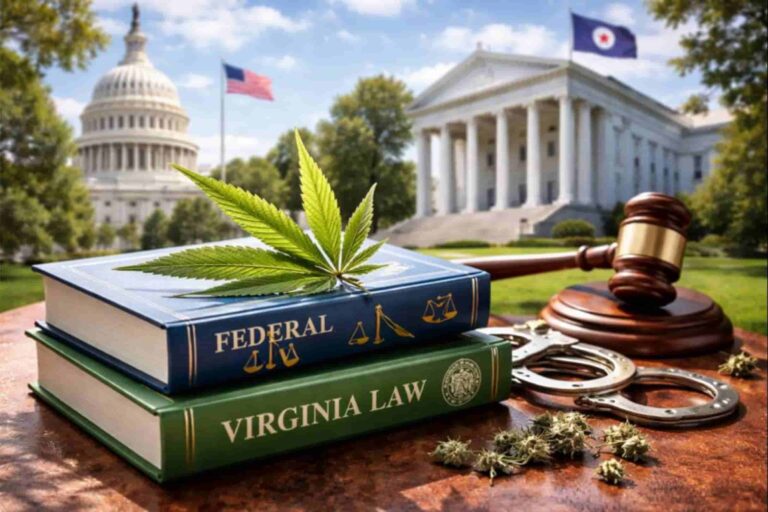
Federal laws and state laws are different when it comes to cannabis, and the differences cause some problems and confusion.
In Virginia, cannabis is legal in several ways, including adult possession and the medical cannabis program.
But under federal law, things are different. Federal law is directed by the Controlled Substances Act. Under this act, state-authorized medical marijuana is now classified as Schedule III, while non-medical marijuana is still treated as an illegal controlled substance and is classified as a prohibited Schedule I drug.
The difference between state and federal law creates a “two-law” problem: you can be following Virginia law, but still be at risk under certain federal rules.
The key idea: State law can’t “erase” federal law
Virginia can decide what is legal inside Virginia. But federal agencies and federal rules tied to federal benefits, licenses, and safety regulations can still apply in many situations—especially when something involves:
- Federal forms and background checks
- Federally regulated jobs (DOT)
- Federal licenses (FAA pilot medical, etc.)
- Federally subsidized housing and benefits
That’s why cannabis can be legal here in Virginia under state law but can still be illegal under federal law. Fortunately for cannabis-certified patients, things are now changing. Keep reading to find out more.
What is the Controlled Substances Act?
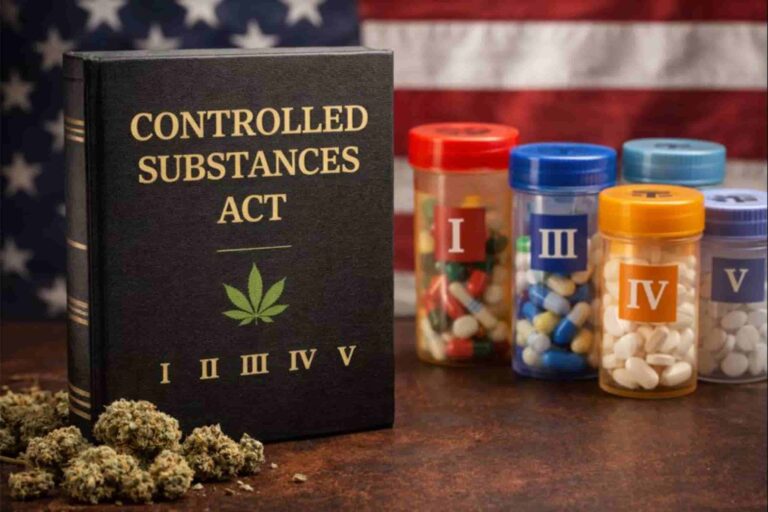
The Controlled Substances Act of 1970 (CSA) is the main federal law that puts drugs into five “Schedules” (Schedule I through V). The schedule is based on medical use, safety, and the risk of abuse. Since its inception in 1970, marijuana has been in Schedule I, the most restrictive category. Advocates have long argued that this characterization was not grounded in science and was driven by political and social pressures. Fortunately, things have recently changed.
“Rescheduling to Schedule III”: What’s happening now
Here’s the timeline, at a high level, of recent federal moves to reconsider marijuana restrictions:
- August 29, 2023: HHS recommended moving marijuana to Schedule III.
- May 21, 2024: DOJ/DEA published a proposed rule to reschedule marijuana to Schedule III.
- December 18, 2025: A White House action directed the government to complete work related to rescheduling and research expansion.
- April 23, 2026: State-authorized medical cannabis was moved to Schedule III—federally recognizing its accepted medical use and safety, opening the door to meaningful changes for patients, physicians, and healthcare researchers.
Rescheduling cannabis to Schedule III was an important move, with consequences for patients and others. Importantly, the move officially acknowledges that the scientific evidence does not support Schedule I classification. Specifically, it recognizes the drug’s medical use, confirms its safety, and acknowledges its low potential for abuse. Learn more about this important change HERE.
Important for patients: Moving medical marijuana to Schedule III means it is now federally legal and regulated similarly to other controlled prescription medications. Federal agencies whose policies are based on the CSA are now actively reviewing and modifying them to reflect this new stance regarding medical patients. To be protected, patients must maintain an active, unexpired Virginia medical cannabis certification and purchase from authorized medical dispensaries.
Federal versus State Laws: Effects on Virginia patients in real life
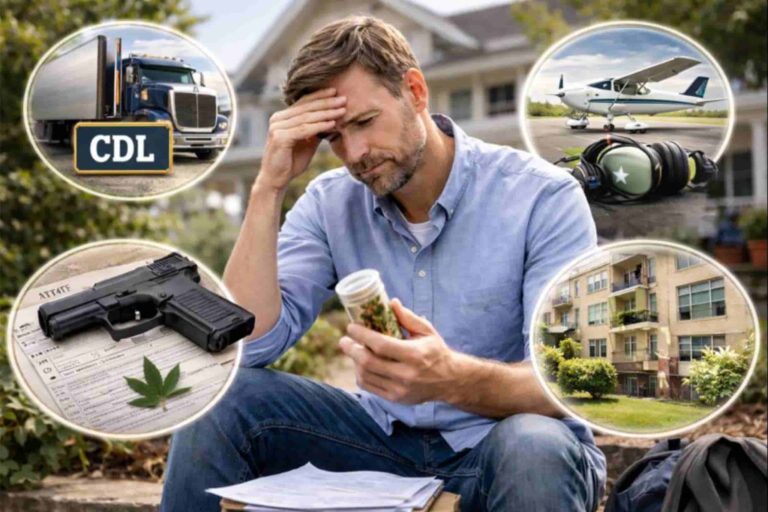
Recent changes in federal cannabis policy have significantly reduced many of the conflicts that once existed between Virginia law and federal law. While some important differences remain, the legal landscape is becoming much more favorable for responsible medical cannabis patients.
Virginia is allowed to create its own cannabis laws, and it has done so. Adults may legally possess and use cannabis under Virginia law, and the Commonwealth operates a well-established medical cannabis program that provides patients with safe, regulated access.
At the federal level, cannabis policy has also changed dramatically. Medical cannabis authorized under state programs is now recognized differently under federal law than recreational cannabis, reducing many of the legal conflicts that previously affected patients.
However, several areas of federal law still deserve careful attention.
1) Firearms and gun purchases
This has historically been one of the biggest conflicts between federal and state cannabis laws—and it has recently seen some of the most significant changes.
For many years, federal law treated all marijuana users the same, regardless of whether they were participating in a state-authorized medical program. ATF Form 4473 specifically warned that marijuana remained illegal under federal law, preventing many medical cannabis patients from purchasing firearms.
Recent federal developments have substantially changed this landscape.
- The U.S. Supreme Court has recognized stronger Second Amendment protections for responsible cannabis users, concluding that the government cannot automatically prohibit firearm ownership simply because a person lawfully uses cannabis.
- The Bureau of Alcohol, Tobacco, Firearms and Explosives (ATF) is updating federal firearm purchase procedures to distinguish certified medical cannabis patients from recreational cannabis users.
- As these changes are implemented, qualified medical cannabis patients are expected to be able to purchase firearms under federal law, provided they otherwise meet all legal requirements.
What this means for patients: Medical cannabis certification no longer carries the same federal firearm concerns that existed in previous years. While implementation of these changes is still underway, the outlook for certified medical cannabis patients has improved dramatically.
Read more about Gun Laws and Cannabis HERE.
2) Commercial Driver’s Licenses (CDLs), DOT-regulated jobs, and safety-sensitive occupations
Although federal cannabis policy has become more accommodating, transportation safety rules remain largely unchanged.
Employees regulated by the U.S. Department of Transportation—including commercial truck drivers, bus drivers, airline crew members, railroad employees, and certain pipeline workers—must continue to comply with federal drug testing requirements.
Current DOT regulations continue to prohibit employees in safety-sensitive positions from performing covered duties after using THC-containing cannabis products, even when prescribed or recommended under a state medical cannabis program.
Likewise, many private employers designate certain positions as “safety-sensitive” and may maintain stricter workplace policies than Virginia law requires.
Bottom line: If you hold a CDL, work in a DOT-regulated position, or occupy a safety-sensitive role, medical cannabis may still affect your employment, even though it is legal under Virginia law.
3) Pilot licensure and FAA medical certification
Aviation remains regulated almost entirely under federal law.
The Federal Aviation Administration continues to require pilots to meet strict medical certification standards. Cannabis use—including medical cannabis—may still affect eligibility for an FAA medical certificate because aviation safety regulations remain considerably more restrictive than most other areas of federal law.
Practical takeaway: If you require an FAA medical certificate, you should consult an aviation medical examiner before using medical cannabis.
4) Federally subsidized housing (Section 8 and public housing)
Housing rules continue to lag behind many of the recent federal cannabis reforms.
Many federally assisted housing programs still prohibit marijuana possession or use on federally funded property, even when the cannabis is legally obtained through Virginia’s medical cannabis program.
Individual housing authorities may have different policies, but federal housing regulations continue to create limitations for some patients.
Practical takeaway: If you receive HUD-assisted housing benefits, discuss your specific situation with your housing authority before using medical cannabis.
5) Federal benefits and government programs
Federal treatment of medical cannabis has become more favorable than it was just a few years ago.
Medical cannabis certification alone generally does not prevent someone from receiving Social Security benefits, Medicare, or many other federal programs. In most situations, participation in Virginia’s medical cannabis program is simply treated as one aspect of your overall medical care.
However, some federal programs may still have their own eligibility requirements or reporting obligations, particularly those involving public safety, security clearances, or specialized federal employment.
Practical takeaway: Most patients receiving federal benefits will not experience problems simply because they participate in Virginia’s medical cannabis program, although certain specialized programs may still have additional rules.
Virginia law still matters—and federal law is becoming more supportive
Virginia continues to provide patients with safe, regulated access to medical cannabis through licensed healthcare practitioners and state-authorized dispensaries.
At the same time, recent federal reforms have eliminated or reduced many of the conflicts that once discouraged patients from seeking medical cannabis treatment. The legal environment continues to evolve, but today’s certified medical cannabis patients enjoy significantly stronger legal protections than they did just a few years ago.
Even so, certain federally regulated areas—including transportation, aviation, and some housing programs—continue to follow specialized federal rules. Patients with questions about these situations should seek individualized legal or professional guidance before relying on general cannabis laws.
Do I Really Need a VA Medical Marijuana Card?
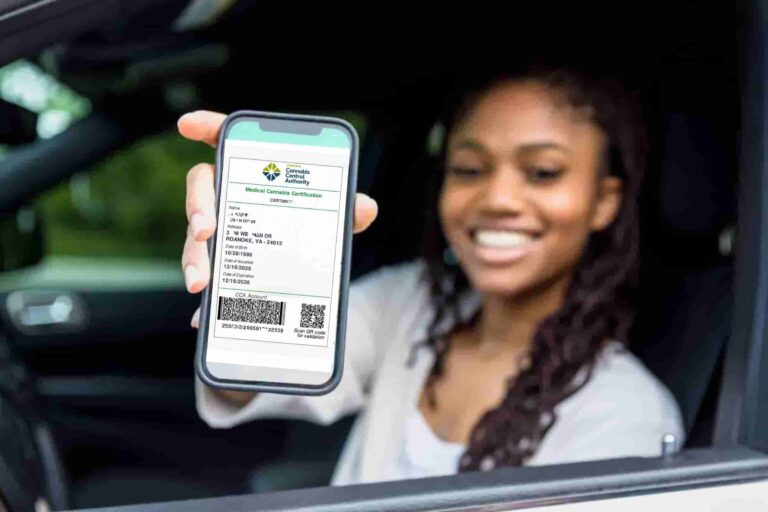
YES. Some people may wonder whether they really need a medical card. For them, it might seem like more trouble and money than necessary. But remember, marijuana is still federally illegal unless it is through a state-authorized medical program. Likewise, cannabis is only available for sale in Virginia through medical marijuana dispensaries. A Virginia medical marijuana card is the only way to access cannabis at state dispensaries. This card is your license to legally purchase and possess medical marijuana in Virginia.
Beyond access to licensed dispensaries, having a medical cannabis card can offer several other important legal and practical benefits. In some situations, it may provide added protections related to employment, housing, and court-ordered drug testing. A medical card can also make it easier to access dispensaries in other states with reciprocal programs and may help reduce the social stigma that still surrounds medical cannabis use by clearly framing it as legitimate healthcare.
In certain legal contexts, patients have even found that documented medical cannabis use with a medical card has helped support their position in DUI or child custody matters.
That said, these protections are not absolute and can vary by situation and jurisdiction. It’s important to stay informed, use cannabis responsibly, and consult a qualified legal professional when questions about your rights or protections arise. Not sure what actually changes once you’re certified? Here’s a look at the consequences of getting a medical marijuana card in Virginia.
Where to Get a Legal Medical Marijuana Card in VA?
Some primary care doctors will write certificates, but most do not. The majority of Virginia medical providers say they are not qualified. You can ask your primary doctor, but that may raise privacy concerns for you.
You can look for another primary care provider. But then you must register as a patient, schedule an appointment, drive to their office, pay their fee, wait in the waiting room, and then meet the provider. Many practitioners are not trained in cannabis therapy or understand the certification process, and typical fees run between $150 and $300.

Is it Legal to Get a Medical Marijuana Card Online in VA?

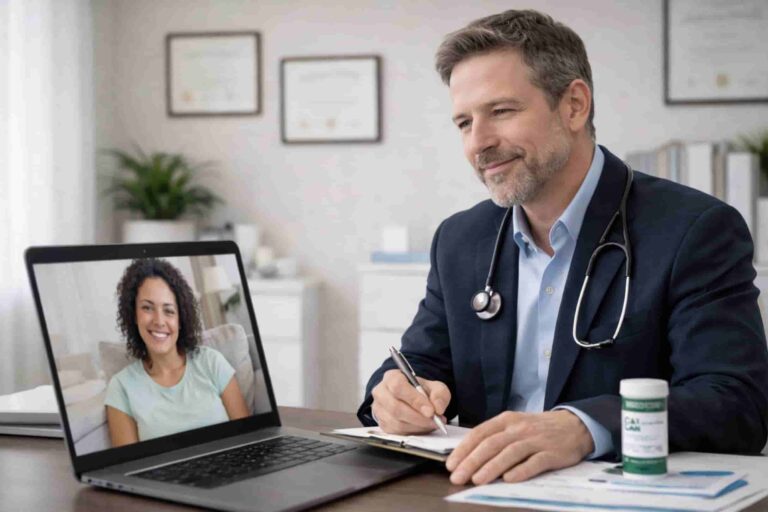
YES. Virginia law allows the use of telemedicine to connect patients with authorized medical specialists, such as ReThink-Rx, to obtain a medical card online.
ReThink-Rx has fully embraced telehealth, making it easy, private, and affordable to get a medical card. Our providers are highly trained and experienced cannabis specialists, and our support staff is caring and helpful. Together, we have issued over 10,000 cannabis certifications to satisfied Virginian patients.
Where are the Best Legally-Compliant Marijuana Doctors in VA?
EXCELLENT Based on 152 reviews
 Posted on Google
 Alex BrownOctober 22, 2025Great doctor with deep understanding of the subject and very professionalPosted on Google
 Tony GregoryOctober 20, 2025Professional, quick and easy. Perfect!Posted on Google
 Mark BergerOctober 18, 2025Great process very helpful and understanding. Show high levels of concern.Posted on Google
 Kelly HeadleeOctober 18, 2025To the point, professional and friendly.Posted on Google
 Jasmine BrownOctober 9, 2025Great experience!!!!Posted on Google
 Marlene GaydosOctober 4, 2025Everything went as planned. Simple phone call to renew.Posted on Google
 Dick ThomesOctober 4, 2025Very easy process. Perfect instructions. Friendly service. Mark was easy to work with.
THE BEST. In Virginia, there are a few medical cannabis certification options. But ReThink-Rx stands solidly above the others. We provide an unrivaled experience for Virginians seeking convenient and reliable access to medical marijuana. With our commitment to professionalism and innovation, we are the best choice for those navigating Virginia’s medical cannabis landscape.
5-STAR CARE. First and foremost, ReThink-Rx is proud of our team of respected healthcare professionals who specialize in medical cannabis evaluation. Our experts possess a solid understanding of Virginia’s medical marijuana program, ensuring that patients receive comprehensive and accurate assessments for certification. Our providers offer personalized care, considering individual medical histories and conditions.
EASY. What sets ReThink-Rx apart is its seamless online platform. Using cutting-edge technology, ReThink-Rx streamlines the certification process, eliminating the need for in-person visits. This convenience is particularly valuable for patients with mobility constraints or those residing in more remote areas. Out technology creates a hassle-free experience, enabling individuals to complete the certification process from the comfort of their own homes.
SAFE. ReThink-Rx prioritizes patient privacy and data security. Our state-of-the-art encryption protocols and stringent privacy measures ensure the utmost confidentiality of sensitive information. Patients can confidently share their medical history and discuss their conditions, knowing their data is safeguarded.
ONGOING SUPPORT. But, our commitment to excellence extends beyond certification. At no additional charge, we provide ongoing support and education to patients, equipping them with the knowledge needed to make informed decisions about their medical cannabis journey. Our comprehensive resources, including educational materials and ongoing access to cannabis experts, empower patients to navigate Virginia’s medical marijuana program with confidence.
AFFORDABLE. Access to quality care means nothing if not affordable. We believe every patient, regardless of means, deserves affordable care. This is why ReThink-Rx is one of the most affordable.
In the realm of online medical cannabis certification, ReThink-Rx reigns in Virginia. Combining expertise, convenience, privacy, and support, we offer a holistic solution for patients seeking access to the benefits of medical marijuana. By choosing ReThink-Rx, Virginians can embark on their medical cannabis journey with assurance, knowing they have made the best choice for their healthcare needs.
Save time, trouble and money. Start your medical cannabis journey today with the professionals at ReThink-Rx.
ReThink-Rx Legal Disclaimer
Important Legal Notice
The information on this page is for educational purposes only and does not constitute legal advice. Cannabis laws in the United States involve a complex overlap of state and federal rules, and how those laws apply can vary based on your job, housing, licenses, and individual circumstances.
ReThink-Rx certifies patients under Virginia law for therapeutic cannabis use. We are medical professionals, not attorneys. We do not provide legal opinions and cannot advise on firearms, employment, licensing, housing, or federal benefits. Patients with questions about these issues should consult a qualified attorney or the relevant federal agency.
Our mission is to help patients understand both the medical benefits of cannabis and the real-world legal limitations that still exist—so you can make informed, responsible decisions about your care.
Virginia Marijuana Law Frequently Asked Questions
Are medical marijuana cards required in Virginia?
Yes. Virginia permits marijuana possession, but the only way to legally purchase products in VA is with a medical cannabis certification.
How do I qualify?
Qualifying for certification is fairly straightforward. You need a medical condition that may be helped with medical marijuana and must be approved by a licensed medical provider. Our specialists approve more than 99% of patients.
Click HERE to learn more.
How old do I need to be?
ReThink-RX provides our services to those over the age of 18.
Special consideration will be given to patients under age 18, but must be arranged by their parent or guardian and must be approved for evaluation beforehand by the doctor.
Do I have to buy from a dispensary?
YES. To be protected under the Virginia Medical Marijuana Act you must purchase from a Virginia dispensary. Purchasing or selling elsewhere remains illegal. With your medical card, you can visit any state-authorized dispensary and legally purchase safe, high-quality cannabis products.
What are the possession and cultivation rules in VA?
As of July 1, 2021, according to VA marijuana laws, adults over 21 years old can legally possess up to one ounce of marijuana. Individuals without a medical marijuana card will not be able to purchase cannabis until adult-use cannabis sales start, probably sometime in 2027.
The state of Virginia’s cannabis legalization statutes allow adults over 21 to cultivate up to four marijuana plants per household. Adults may share up to one ounce of cannabis in a private residence if there is no payment exchanged between parties.
Will my insurance or Medicaid pay for my treatment?
At this time, insurance and Medicaid will not cover the cost of your card or medical product. This is due to the Federal prohibition of cannabis by the Controlled Substances Act. We hope that cannabis will soon be removed from this Act and that patients will be able to get the financial assistance they need to access this important therapy. Meanwhile, ReThink-Rx has positioned our pricing to make it affordable for those of lesser means.
Can I use my Virginia medical card in other states?
Yes–there are some states that allow patients with Virginia medical marijuana cards to purchase medical marijuana products from their dispensaries. Currently, Washington D.C. is the only territory that allows Virginians to do so without any exceptions. The following states also offer reciprocity, though there are some exceptions:
- Arizona
- Arkansas
- California
- Maine
- Missouri
- Montana
- Nevada
- New Hampshire
- New Jersey
- New Mexico
- Oklahoma
- Rhode Island
- Utah
- West Virginia
Since there are exceptions to those states’ reciprocity laws, make sure you do your research before trying to purchase medical marijuana in those states with your Virginia MMJ card.
Can I get fired for smoking medical marijuana at work?
Employers are not required to accommodate the use of medical marijuana in the workplace. So yes–you can get fired for consuming medical marijuana products at work, even if you obtained them legally. There are specific protections, however, against being terminated, disciplined or discriminated against as a result of an employment drug screen.
Why is recreational marijuana legal in Virginia but still illegal federally?
Virginia sets its own laws for what is allowed within the state. But the federal government follows the Controlled Substances Act, which still treats recreational marijuana as illegal nationwide. Fortunately, the CSA now considers medical cannabis and certified medical patients as legal, though subject to special rules and restrictions.
What if I have a CDL or work in a DOT-regulated job?
Yes. DOT rules still bar THC for safety-sensitive jobs, even with a medical card. Read more: medical marijuana with a CDL.
Does medical marijuana affect pilots or FAA medical certificates?
Yes. Pilots answer to the FAA, and cannabis use can affect your medical certificate. Read more for Virginia aviators.
Can cannabis affect Section 8 or public housing?
Yes. Housing assistance is federal.
Federal housing programs still restrict marijuana on federally funded property. Read more on housing.
Will cannabis affect Social Security or other government benefits?
Usually not. A medical card alone generally doesn’t stop benefits like SSDI or SSI, though some federal programs have their own rules. Read more on disability benefits.
What’s the safest takeaway for Virginia patients?
Virginia law protects you in Virginia, but federal rules still matter for jobs, flying, federal housing and some benefits. Check your situation before you rely on it.
RETHINK
CANNABIS
, HEALTH
, WELLNESS
, COMFORT
WITH RETHINK-RX™