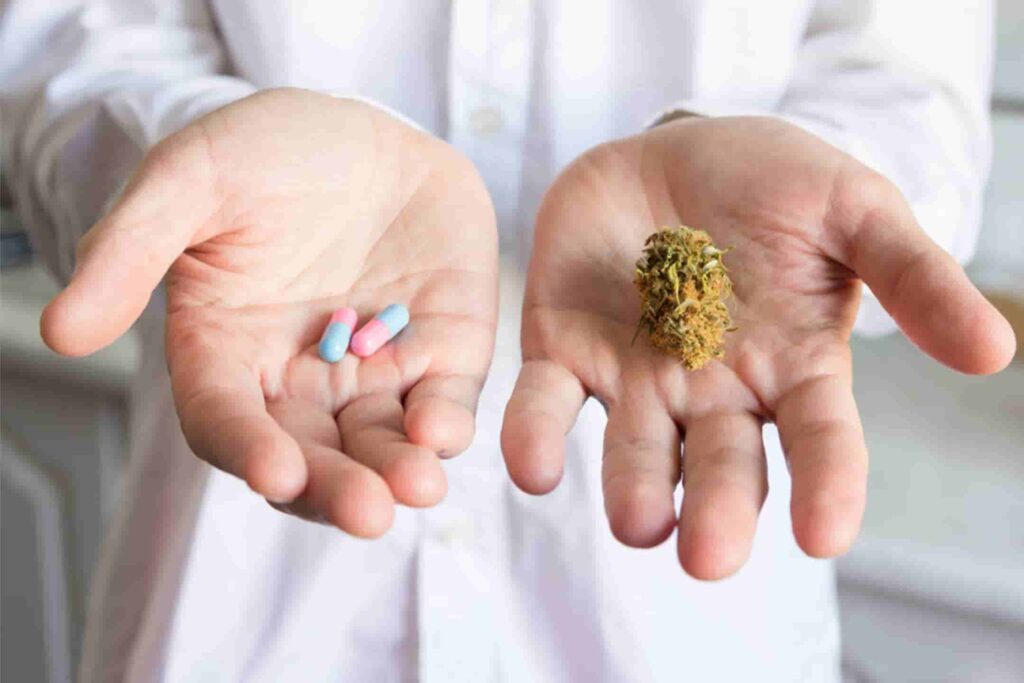

Why Cannabis May Be the Safer, More Effective Choice
Chronic low back pain is one of the most common—and frustrating—conditions patients face. It affects more than half a billion people worldwide and remains a leading cause of disability, missed work, and reduced quality of life. For decades, treatment has relied heavily on medications like NSAIDs and opioids. Yet many patients continue to experience only modest pain relief while facing significant risks, especially with long-term opioid use.
Today, medical marijuana is emerging as a safer and more effective alternative for many people living with chronic low back pain. And new research is offering compelling evidence to support what clinicians and patients have been reporting for years: cannabis may outperform opioids in both pain relief and tolerability.
A recent randomized controlled trial—the first of its kind—directly compared a standardized full-spectrum cannabis extract (called VER-01) with commonly used opioids in adults with chronic low back pain. The results were striking and are helping reshape how we think about chronic pain management.
As a medical cannabis physician, I’ve seen firsthand how cannabis can help patients reduce pain, sleep better, and regain function without the hazards that come with opioids. Below, we’ll walk through what the research found, why cannabis may be the better option for many patients, and how to approach integrating medical marijuana into a safe, effective pain-management regimen.
The Problem With Traditional Pain Options
Before diving into the research, it’s important to understand why opioids and NSAIDs often fall short.
1. Limited Long-Term Effectiveness
NSAIDs may help with acute flares, but they rarely provide substantial or lasting relief for chronic low back pain.
Opioids can offer short-term benefit, but tolerance develops quickly, requiring higher doses for the same effect. Over time, the risk-to-benefit ratio shifts in the wrong direction.
2. Major Side Effects
Opioids carry a long list of risks:
- Constipation
- Nausea
- Sedation
- Respiratory depression
-
Dependence and addiction
Opioid-induced constipation alone affects nearly every long-term user and significantly impacts quality of life.
NSAIDs are not without their own dangers, including gastrointestinal bleeding, kidney injury, and cardiovascular risk.
3. Lack of Functional Improvement
Perhaps most importantly, many patients still experience daily pain, poor sleep, and reduced mobility, despite taking medications that were supposed to help.
This is where cannabis shows promise.
A First-of-Its-Kind Study: Cannabis vs. Opiates for Low Back Pain
In the randomized controlled trial summarized above, 384 adults with chronic low back pain were assigned to receive either:
- VER-01, a standardized full-spectrum cannabis extract
- or
-
A variety of commercially available opioids
The study lasted 27 weeks—long enough to see actual, sustained outcomes rather than short-term reactions.
The Goal
Researchers wanted to know whether cannabis could:
- Reduce pain more effectively
- Improve sleep
-
And cause fewer gastrointestinal side effects, especially constipation
The results were more than encouraging.
Cannabis Was Four Times Less Likely to Cause Constipation
One of the most dramatic differences between the two treatments was tolerability—how well people’s bodies handled the medication.
Patients using VER-01 were:
- Four times less likely to experience constipation than those using opioids
-
Three times less likely to require laxatives
This is important because opioid-induced constipation is not just uncomfortable—it can lead to bowel obstruction, reduced appetite, nausea, and decreased willingness to continue treatment.
Cannabis, by comparison, has almost no direct impact on GI motility. For patients with chronic low back pain, improved tolerability means:
- Better adherence
- Better daily functioning
-
Better quality of life
For many people, avoiding opioid-related GI distress is reason enough to consider medical marijuana.
Cannabis Provided Greater Overall Pain Reduction
The second significant finding: Cannabis worked better.
Over 6 months, patients receiving VER-01 experienced:
- 2.50-point reduction in pain on an 11-point scale
-
compared to 2.16 points with opioids
This difference may seem modest on paper, but for chronic pain patients, even a fractional improvement can translate into:
- Greater mobility
- Improved mood
- More productivity
- Reduced frustration
-
Less reliance on rescue medications
The study found that cannabis consistently outperformed opioids across the entire treatment period—not just at a single time point.
Pain reduction was especially pronounced in people with severe pain, where cannabis made a significantly larger impact compared to opioids.
Patients Also Slept Better With Cannabis
Chronic low back pain doesn’t just hurt during the day—it impacts sleep, which then worsens pain and inflammation in a frustrating cycle.
In the study:
- Sleep improved by 2.52 points in the cannabis group
-
compared to 2.07 points in the opioid group
Better sleep is not a small benefit. It’s huge. Improved sleep means:
- Lower inflammation
- Better healing
- Reduced perception of pain
- Improved mental health
-
More energy for physical activity and rehabilitation
Cannabis helps regulate sleep through the endocannabinoid system, especially strains or formulations with balanced THC and CBD.
Why Cannabis May Work Better
Cannabis interacts with the body’s endocannabinoid system, a network that regulates:
- Pain
- Mood
- Inflammation
- Sleep
-
Immune response
THC activates CB1 receptors involved in pain modulation, while CBD reduces inflammation and calms overactive nerves. When combined—as in full-spectrum products—these compounds may offer synergistic benefits known as the entourage effect.
Opioids, by contrast, target only the brain’s opioid receptors, reducing pain signals but also depressing the central nervous system, slowing the gut, and increasing dependence risk.
Cannabis takes a more balanced, whole-body approach.
Safer Profile—Lower Risk of Dependence
Unlike opioids, cannabis:
- Does not slow or stop breathing
- Does not cause fatal overdose in typical use
- Has a much lower risk of dependence
-
Does not require consistent dose escalation
Many patients actually reduce their cannabis dose over time once inflammation and muscle tension improve.
And for people already taking opioids, medical marijuana can often help reduce dosage—sometimes dramatically—under proper medical supervision.
How Medical Marijuana Fits Into a Low Back Pain Plan
Medical cannabis should be part of a comprehensive treatment strategy, not a standalone fix. At ReThink-Rx, we help patients incorporate cannabis into a safe, structured plan that often includes:
- Stretching and mobility work
- Core strengthening
- Massage therapy
- Heat/cold therapies
- Stress-reduction techniques
- Ergonomic adjustments
-
Sleep hygiene strategies
Cannabis enhances these efforts by:
- Reducing pain enough to allow exercise
- Relaxing muscles
- Improving sleep
-
Lowering inflammation
This multi-modal approach is backed by evidence and produces the most reliable long-term results.
Choosing the Right Cannabis Product
Patients with chronic low back pain tend to benefit from formulations such as:
- Balanced THC/CBD tinctures for all-day coverage
- THC-dominant products for nighttime pain and sleep
- CBD-rich products for inflammatory flares
- Topicals for localized muscle tension
-
Vaporized flower for quick breakthrough relief
Finding the right products and balance for your needs is important. Your ideal regimen depends on:
- Pain severity
- Lifestyle
- Sensitivity to THC
- Whether daytime use is needed
-
Medical history
A personalized plan is essential—and that’s exactly what medical cannabis certification services like ReThink-Rx provide.
The Bottom Line: Cannabis Outperformed Opioids
This high-quality clinical trial reinforces what many patients already know:
Medical marijuana offers better tolerability, better long-term benefits, and better overall quality of life than opioids for chronic low back pain.
With fewer gastrointestinal problems, better sleep improvements, and equal or superior pain reduction—especially in severe cases—cannabis is quickly becoming a preferred option for patients seeking relief without the risks of traditional medications.
For those exploring safer, more natural ways to manage chronic low back pain, medical marijuana is a promising and evidence-supported solution.
Disclaimer: This article is for educational purposes only and is not a substitute for professional medical advice, diagnosis, or treatment. Always consult a qualified healthcare provider with any questions about your health or medical conditions.

Dr. Marsh, is a board-certified anesthesiologist with over 37 years of healthcare experience. A graduate of Syracuse University, the New York College of Osteopathic Medicine, and Rutgers University Medical School, he has earned recognition from FindaTopDoc.com for clinical excellence. Dr. Marsh founded ReThink-Rx in 2021, where he now focuses on educating, supporting, and certifying patients for medical cannabis.