
Virginia’s new hemp THC limit is now in effect. As of August 15, 2026, products sold as hemp in Virginia may contain no more than two milligrams of total THC per package. The previous exception for products containing at least 25 times more CBD than THC has ended.
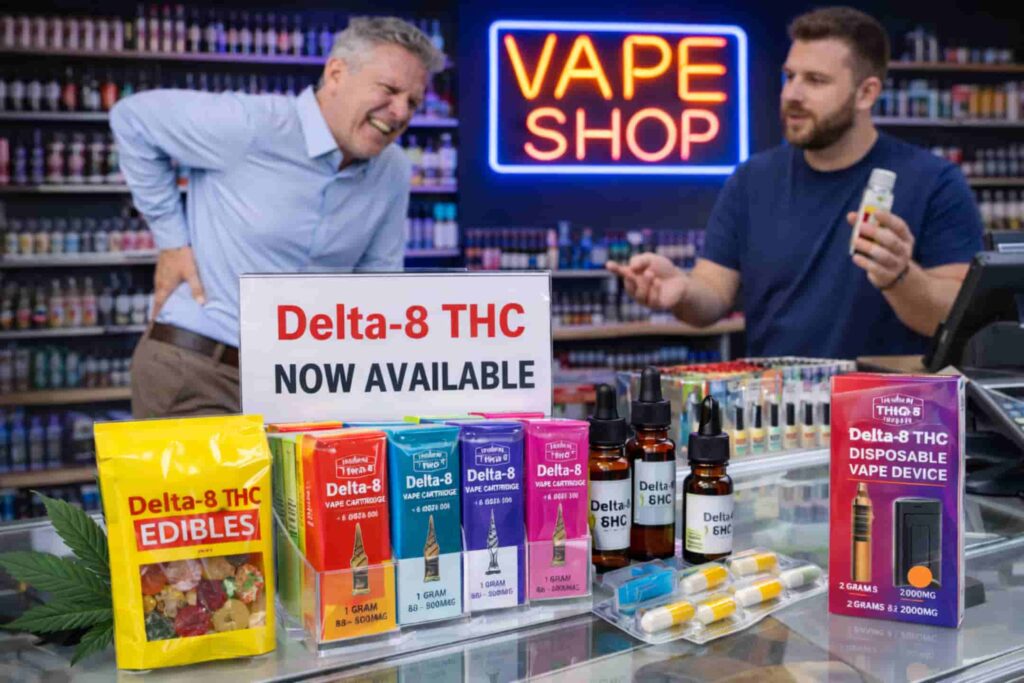
For patients who used delta-8, hemp-derived delta-9, or similar products, this is a major change. Many intoxicating hemp gummies, tinctures, and vape products can no longer be legally sold through Virginia vape shops, convenience stores, and other hemp retailers.
THC hasn’t disappeared from Virginia, though. Patients with a valid medical cannabis certification may still obtain regulated THC products from authorized medical dispensaries. That makes certification more valuable—and, for some patients, more important than ever.
What changed under Virginia’s hemp THC law?
Virginia previously allowed certain hemp products to contain more than two milligrams of THC when they met a 25-to-1 CBD-to-THC ratio. That exception permitted the sale of some products capable of causing noticeable intoxicating effects.
The new law removes that option. A product with more than two milligrams of total THC per package can no longer be produced or sold as hemp in Virginia, regardless of how much CBD it contains.
Retailers that violate the requirements may face civil penalties of up to $10,000 per day. As enforcement increases, patients may see familiar products removed from shelves or replaced with much weaker alternatives.
This change is part of Virginia’s larger effort to place intoxicating cannabis products within a more controlled system. It does not mean every hemp product is unsafe. It does reflect concerns about inconsistent potency, inaccurate labels, contaminants, child-friendly packaging, and products made without the testing standards required in Virginia’s medical cannabis program.
Why do patients need continued access to THC?

For many people, THC isn’t simply about feeling intoxicated. It’s one of several active compounds in cannabis that may have therapeutic value when used carefully.
Research suggests that THC may help some patients manage symptoms associated with:
- Chronic or neuropathic pain
- Muscle spasms
- Nausea and poor appetite
- Sleep disruption
- Certain inflammatory conditions
- Symptoms that haven’t responded adequately to conventional treatment
Response varies widely. A dose that helps one person sleep may leave another person anxious, dizzy, or overly sedated. That’s one reason predictable labeling and thoughtful dosing matter.
Medical cannabis should be treated as a therapeutic option—not a cure-all. Patients still need to consider medication interactions, mental health history, fall risk, driving safety, cardiovascular concerns, and the possibility of developing tolerance or dependence.
How is Virginia medical cannabis different from retail hemp?
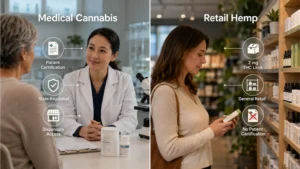
Virginia’s medical cannabis products are regulated separately from ordinary hemp products. Permitted pharmaceutical processors produce them, and the state registers, tests, labels, and sells them through authorized medical dispensaries.
Under the medical program, cannabis products may generally contain up to 10 milligrams of THC per dispensed dose, subject to applicable rules. That’s very different from the new two-milligram limit for an entire hemp package.
Medical dispensaries also offer multiple formulations and cannabinoid ratios. Depending on availability, patients may find products containing THC, CBD, or a combination of both.
The goal isn’t necessarily to choose the strongest product. Often, the better approach is finding the lowest effective dose in a form that fits the patient’s symptoms, sensitivity, and daily routine.
What are the benefits of a medical cannabis certification?
A Virginia medical cannabis certification provides several practical benefits:
- Continued access to regulated THC products
- Products with verified cannabinoid labeling
- State-required testing and packaging standards
- Access to authorized medical dispensaries
- A broader selection of formulations and strengths
- Recognition as a patient using cannabis for a diagnosed medical condition
- An opportunity to discuss risks and goals with a qualified practitioner
Certification doesn’t guarantee that cannabis will be effective or appropriate. It does provide a more structured path than trying unfamiliar products from convenience stores, websites, or unverified sellers.
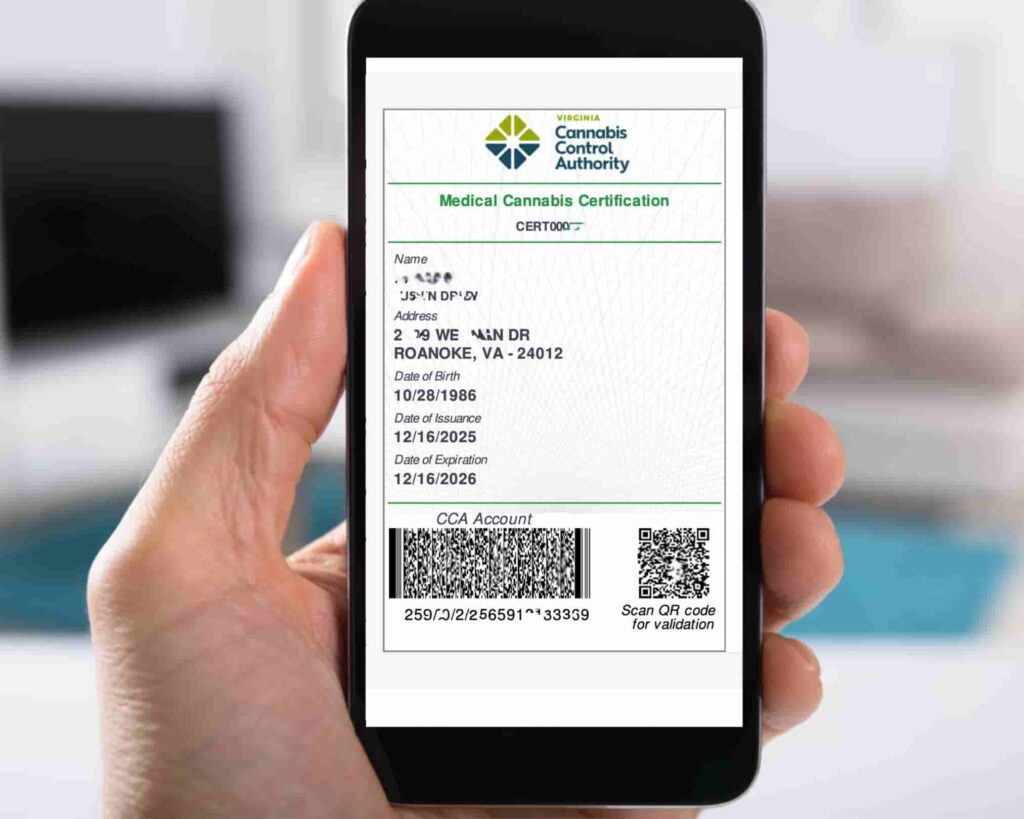
Virginia permits qualified practitioners to complete certification evaluations through real-time audiovisual telemedicine. A certification generally remains valid for one year unless the practitioner sets an earlier expiration date.
What should current hemp THC users do?
Don’t rush to replace a discontinued product with something unfamiliar. Products sold online or across state lines may not comply with Virginia law, and their labels may not accurately reflect what’s inside.
Instead, consider these steps:
- Review the label on your current product, including total THC per package.
- Avoid increasing the dose of a weaker product without medical guidance.
- Don’t drive or operate machinery after using an intoxicating cannabinoid.
- Discuss cannabis with your healthcare provider, especially if you take prescription medications.
- Consider a medical cannabis evaluation if you need continued access to therapeutic THC.
Frequently asked questions
Is delta-8 THC now illegal in Virginia?
Not every delta-8 product is automatically illegal. However, a hemp product sold in Virginia cannot exceed two milligrams of total THC per package or the applicable THC concentration limit. Many previously available delta-8 products won’t meet those requirements.
Can I still buy THC with a Virginia medical cannabis certification?
Qualified patients may purchase regulated cannabis products from authorized Virginia medical dispensaries. The medical program operates under separate rules from ordinary hemp retail sales.
Do I need a physical medical marijuana card?
Virginia patients generally use a practitioner-issued written certification and government-issued identification. Most adult patients can skip separate patient registration, though registered agents and certain other circumstances may have different requirements.
Will recreational marijuana stores replace the need for certification?
Virginia’s regulated adult-use retail market is scheduled to begin July 1, 2027. The final regulations and practical differences between medical and adult-use access are still developing. A medical certification remains the established route for patients seeking regulated cannabis for treatment today.
Suggested reading: Read more about the upcoming Federal ban on Hemp THC products HERE
Medical disclaimer: This article is for educational purposes only and is not a substitute for individualized medical advice, diagnosis, or treatment. Cannabis may cause side effects and interact with medications. Consult a qualified healthcare professional before beginning or changing cannabis use.

Dr. Marsh, is a board-certified anesthesiologist with over 37 years of healthcare experience. A graduate of Syracuse University, the New York College of Osteopathic Medicine, and Rutgers University Medical School, he has earned recognition from FindaTopDoc.com for clinical excellence. Dr. Marsh founded ReThink-Rx in 2021, where he now focuses on educating, supporting, and certifying patients for medical cannabis.