
Tremors are involuntary, rhythmic shaking movements that can affect different parts of the body, most commonly the hands, arms, head, or voice. For many people, tremors are mild and manageable. For others, they can interfere with daily activities such as writing, eating, holding objects, or maintaining balance. While tremors are often associated with neurologic conditions such as Parkinson’s disease or essential tremor, they may also occur with other medical conditions or as a side effect of medications.
Managing tremors can be challenging. Standard treatments help many patients, but they do not always fully control symptoms and may introduce unwanted side effects. Because of this, some individuals explore additional supportive therapies, including medical cannabis, as part of a broader symptom management strategy.
This article focuses on the potential role of cannabinoids in symptom management in patients struggling with tremors.
Understanding Tremors
A tremor occurs when muscles repeatedly contract and relax in an involuntary pattern. These movements can range from subtle shaking to more pronounced oscillations that affect coordination and precision.
Tremors may appear in several forms, including:
- Essential tremor, a common movement disorder affecting the hands and arms
- Parkinsonian tremor, associated with Parkinson’s disease
- Intention tremor, which occurs during voluntary movement
-
Resting tremor, which occurs when muscles are relaxed
Tremor severity and frequency vary widely. Some individuals experience occasional shaking, while others experience persistent symptoms that affect daily functioning.
How Tremors Affect Daily Life
Even mild tremors can become frustrating over time. Activities that require fine motor control—such as using utensils, typing, writing, or holding a cup—may become difficult.
More severe tremors may lead to:
- Difficulty eating or drinking without spilling
- Trouble writing or performing precise tasks
- Muscle fatigue from constant movement
- Anxiety or embarrassment in social situations
-
Sleep disruption in some cases
Because tremors affect both physical function and emotional well-being, treatment strategies often focus on improving overall quality of life rather than eliminating symptoms entirely.
Conventional Treatments and Their Limits
Standard treatments for tremors depend on the underlying cause. Physicians may prescribe medications such as beta blockers, anticonvulsants, or other neurologic therapies. Physical therapy and occupational therapy can also help patients develop adaptive strategies for daily activities.
While these treatments help many individuals, they may have limitations, including:
- Incomplete symptom control
- Fatigue or sedation
- Dizziness or low blood pressure
- Cognitive side effects
-
Reduced effectiveness over time
Because tremors often involve complex neurologic pathways, it can be difficult to achieve consistent control with a single medication.
The Endocannabinoid System and Movement
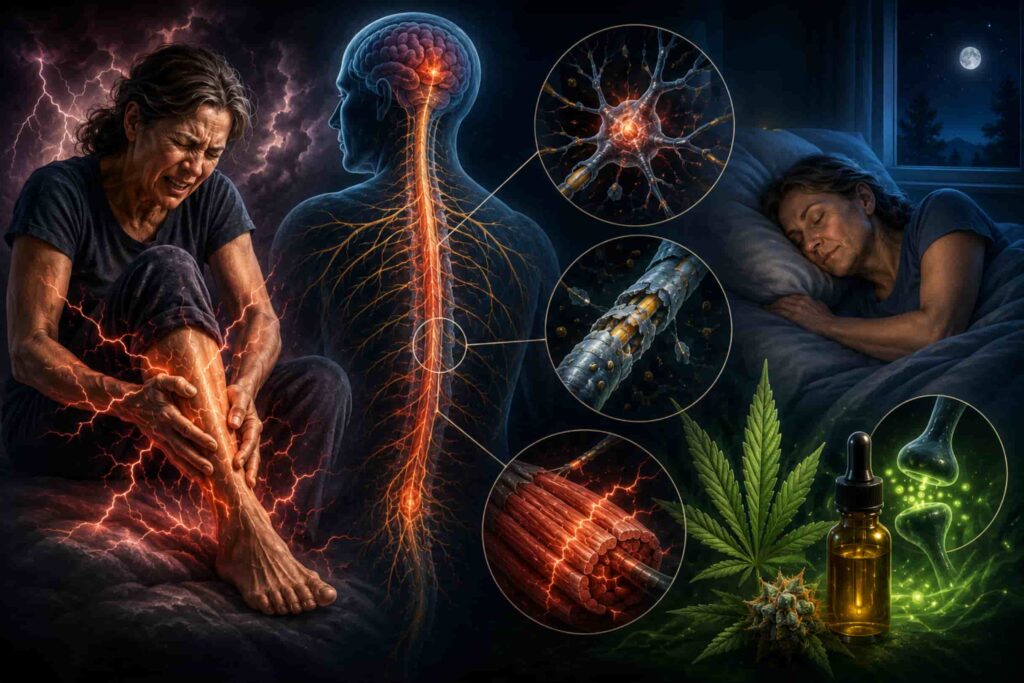
Medical cannabis interacts with the body’s endocannabinoid system (ECS), a network of receptors and signaling molecules (endocannabinoids) involved in regulating many physiological processes, including movement, muscle tone, pain perception, and stress response.
Cannabinoid receptors are found throughout the brain, particularly in regions involved in motor control such as the basal ganglia and cerebellum. These areas help coordinate smooth and controlled movement.
Researchers believe that the ECS plays an important role in maintaining balance within these movement pathways. When this balance is disrupted—such as in certain neurologic conditions—abnormal movement patterns, such as tremors, may occur.
Because cannabinoids influence ECS activity, researchers have become interested in whether cannabis may help regulate these pathways.
Potential Areas of Support
Medical cannabis does not cure the underlying conditions that cause tremors. Its potential role is supportive—helping manage symptoms that interfere with comfort and daily activities.
Muscle Relaxation
Some cannabinoids may help reduce excessive muscle activity and promote relaxation. For certain individuals, this effect may reduce tremor intensity or make it easier to manage.
Nervous System Balance
Tremors often result from irregular nerve signaling in motor pathways. Cannabinoids may influence how nerve signals are transmitted within the brain and spinal cord, potentially supporting more balanced motor control.
Stress and Anxiety Reduction
Stress and anxiety frequently worsen tremors. Many patients notice that shaking becomes more pronounced during emotional stress, fatigue, or social pressure.
By promoting relaxation and reducing anxiety, cannabis may help break this cycle for some individuals.
Sleep Support
Sleep disruption can worsen neurologic symptoms, including tremors. Poor sleep may increase muscle tension and decrease nervous system resilience. For some patients, improved sleep quality leads to better symptom control during the day.
Pain and Muscle Fatigue
Persistent tremors can cause muscle soreness or fatigue over time. Cannabinoids may help modulate pain perception and support muscle comfort in certain cases.
What Research Suggests
Scientific research into cannabis and movement disorders is still evolving. Some studies have explored cannabinoids in conditions such as Parkinson’s disease and essential tremor, with mixed but promising findings.
While results vary, some patients report improvements in comfort, sleep, and overall symptom burden. More research is needed to determine which patients may benefit most and how cannabinoid therapies should be used in clinical practice.
For now, cannabis is generally considered a supportive therapy rather than a primary treatment for tremors.
Safety and Individualized Care
Medical cannabis is not appropriate for every patient. Factors such as age, overall health, mental health history, and current medications must be carefully evaluated.
Because tremors often occur in neurologic conditions that affect balance and coordination, treatment decisions should be made thoughtfully with medical supervision.
Patients should always discuss cannabis use with their healthcare provider, particularly if they are taking medications that affect the nervous system.
Integrating Cannabis Into a Treatment Plan
When medical cannabis is considered, it is typically used alongside established treatments rather than replacing them. A comprehensive care plan for tremors may include:
- Neurologic medications
- Physical or occupational therapy
- Lifestyle adjustments
- Stress management techniques
-
Sleep support strategies
The goal is to improve comfort, maintain function, and reduce the overall burden of symptoms.
Looking Ahead
Interest in medical cannabis and movement disorders continues to grow as researchers explore how the endocannabinoid system influences motor control. As more studies emerge, clinicians will gain clearer guidance about the potential benefits and risks of cannabinoid-based therapies.
Future research may help identify which tremor conditions respond best to cannabinoids and how these therapies can be integrated safely into neurologic care.
Final Thoughts
Tremors can significantly affect daily life, making simple activities more challenging and sometimes creating emotional stress. While traditional treatments remain essential, some patients continue to search for additional ways to improve comfort and function.
Medical cannabis is not a cure for tremors, but it may offer supportive symptom relief for certain individuals when used responsibly and under medical supervision. By influencing the body’s natural regulatory systems, cannabinoids may help some patients achieve greater relaxation, improved sleep, and better overall symptom control.
As research continues and understanding grows, medical cannabis may become an increasingly recognized tool within comprehensive tremor management—always guided by careful evaluation, individualized care, and ongoing medical oversight.
Disclaimer: This article is for educational purposes only and is not a substitute for professional medical advice, diagnosis, or treatment. Always consult a qualified healthcare provider with any questions about your health or medical conditions.

Dr. Marsh, is a board-certified anesthesiologist with over 37 years of healthcare experience. A graduate of Syracuse University, the New York College of Osteopathic Medicine, and Rutgers University Medical School, he has earned recognition from FindaTopDoc.com for clinical excellence. Dr. Marsh founded ReThink-Rx in 2021, where he now focuses on educating, supporting, and certifying patients for medical cannabis.