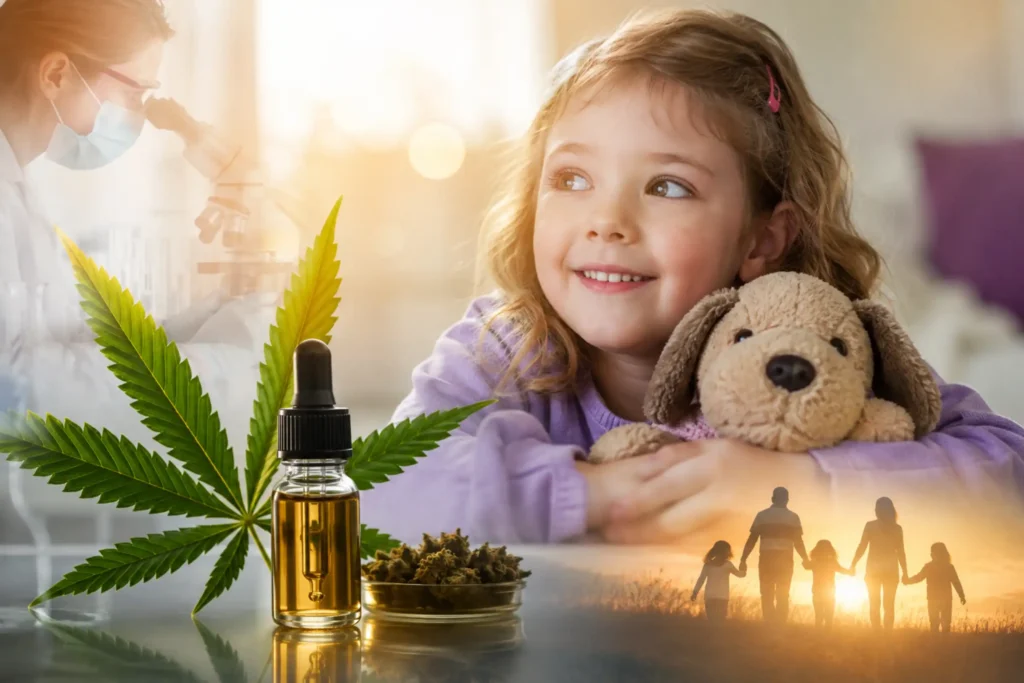
The story of Charlotte’s Web and medical cannabis begins with a little girl whose seizures were so severe that conventional treatments weren’t giving her family much hope.
Her name was Charlotte Figi. After her family tried a cannabis extract high in CBD and very low in THC, they reported a remarkable drop in her seizures. Charlotte’s experience didn’t prove that cannabis could treat epilepsy, but it did something important: it got doctors, researchers, lawmakers, and families asking questions.
Those questions eventually helped change medicine.
Who Was Charlotte Figi?
Charlotte Figi was born in Colorado in 2006. Her first seizure occurred when she was only about three months old.
She was eventually diagnosed with Dravet syndrome, a rare and severe form of epilepsy that begins in infancy. Children with Dravet syndrome can experience frequent, prolonged seizures that may be difficult to control with standard anti-seizure medications.
Charlotte’s case was particularly severe. By early childhood, she was reportedly having hundreds of seizures each week.
Her parents, Paige and Matt Figi, tried numerous medications and treatments. Nothing provided adequate control.
Eventually, they began looking at an option that was highly controversial at the time: medical cannabis.
Why Did Charlotte’s Family Try CBD?
Charlotte’s parents weren’t looking for conventional marijuana.
They became interested in CBD, or cannabidiol, a cannabis compound that doesn’t produce the typical “high” associated with THC. Early research suggested CBD might have anti-seizure properties, although the evidence at the time was limited.
Charlotte’s family connected with the Stanley brothers, Colorado cannabis growers who had developed an unusual variety of cannabis.
It was high in CBD and very low in THC.
Charlotte began taking an extract made from the plant in 2012. According to her family, the results were dramatic. Her seizure frequency reportedly fell from around 300 seizures per week to about one per week.
The cannabis variety was renamed in her honor.
Charlotte’s Web was born.
How Charlotte’s Web Changed Medical Cannabis
Charlotte’s story reached a huge audience in 2013 when she appeared in CNN’s documentary Weed with Dr. Sanjay Gupta.
For many Americans, it was their first introduction to the idea that cannabis could be used very differently from recreational marijuana.
People also began hearing about the difference between CBD and THC.
THC is the cannabinoid primarily responsible for cannabis intoxication. CBD isn’t intoxicating in the same way, and researchers were becoming increasingly interested in its possible medical uses.
Charlotte’s story spread quickly.
Families with children who had difficult-to-treat epilepsy began seeking high-CBD cannabis preparations. Some even moved to Colorado because similar products weren’t legally available in their home states.
Lawmakers took notice. So did researchers.
And an industry began to grow around CBD.
Did Charlotte’s Web Really Treat Epilepsy?
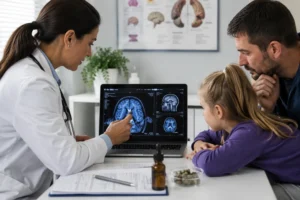
Charlotte’s experience was compelling, but it was still an individual case.
That’s an important distinction.
A dramatic response in one patient can’t tell us whether a treatment will work for thousands of other people. Controlled clinical trials are needed to answer that question.
Fortunately, researchers began conducting them.
Studies of purified CBD for severe childhood epilepsy eventually showed that CBD could reduce seizure frequency in some patients with treatment-resistant seizure disorders, including Dravet syndrome.
That research led to something that would have seemed unlikely when Charlotte first started using cannabis.
In 2018, the FDA approved Epidiolex, a prescription medication containing purified cannabidiol.
Epidiolex is now approved for seizures associated with:
- Dravet syndrome
- Lennox-Gastaut syndrome
- Tuberous sclerosis complex
This was a major milestone. A cannabinoid derived from cannabis had moved through clinical trials and become an FDA-approved prescription medicine.
Suggested Reading: Medical Cannabis and Pediatric Seizures
Is Charlotte’s Web the Same as Epidiolex?
No.
The original Charlotte’s Web was a cannabis-derived preparation containing high levels of CBD and relatively little THC. Epidiolex is a standardized pharmaceutical product containing purified CBD.
Neither should automatically be considered equivalent to CBD products sold online, at convenience stores, or in wellness shops.
Commercial CBD products can vary in strength, purity, labeling accuracy, and cannabinoid content. That’s one reason medical guidance and product quality matter, especially when cannabis or CBD is being considered for a serious medical condition.
CBD Still Has Risks
CBD is often described as non-intoxicating, but that doesn’t mean it’s harmless.
Possible concerns include:
- Sleepiness or fatigue
- Changes in appetite
- Diarrhea or gastrointestinal symptoms
- Liver enzyme abnormalities
- Interactions with prescription medications
Drug interactions are especially important for patients taking seizure medications. CBD can change how the body processes certain drugs, potentially affecting their blood levels.
Parents should never replace a child’s prescribed epilepsy medication with an over-the-counter CBD product without medical guidance.
Charlotte’s Web Helped Spark the CBD Industry
It’s difficult to overstate how unfamiliar CBD was to the average American when Charlotte began treatment.
That changed quickly.
Charlotte’s story helped bring medical CBD into mainstream conversation. Families advocated for access. States began changing cannabis laws. Researchers became more interested. Companies started developing high-CBD products.
Before long, CBD wasn’t limited to medical cannabis discussions. It appeared in oils, capsules, gummies, creams, beverages, cosmetics, and countless other consumer products.
Not every claim made about CBD has been supported by good science. That’s worth remembering.
The strongest evidence for CBD remains concentrated in specific medical uses, particularly certain seizure disorders. Research into pain, anxiety, sleep, inflammation, and other conditions continues, but the quality of evidence varies considerably.
What Charlotte Taught Us About Medical Cannabis
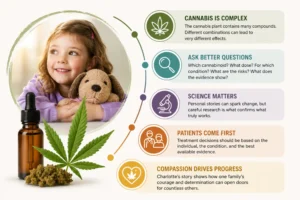
Charlotte Figi’s story helped change the way people thought about cannabis.
Instead of simply asking whether marijuana was “medicine,” researchers began asking better questions.
Which cannabinoid? What dose? For which condition? What are the risks? And does the evidence actually show that it works?
Those are the questions we should still be asking today.
Medical cannabis isn’t one drug. Products may contain very different amounts of THC, CBD, and other cannabinoids, which can lead to very different effects.
That’s why choosing cannabis for medical purposes should be based on the patient, the condition being treated, product composition, potential medication interactions, and the available scientific evidence—not simply the word “cannabis” on the label.
The Legacy of Charlotte Figi
Charlotte died in 2020 at only 13 years old. Her influence, however, extends far beyond her short life.
One family’s search for another treatment option helped introduce millions of people to CBD. It encouraged research, influenced cannabis policy, helped build the modern CBD industry, and eventually contributed to a much broader scientific discussion about cannabinoids as medicine.
Perhaps that’s the most important part of the Charlotte’s Web story.
Charlotte didn’t prove that cannabis was a cure-all. She helped give medicine a reason to take a closer look.
And what researchers found changed the conversation forever.
Medical disclaimer: This article is for educational purposes only and isn’t intended to diagnose, treat, cure, or prevent any medical condition. Cannabis and CBD may cause side effects and interact with medications. Patients—especially children and people with seizure disorders—should discuss cannabinoid treatments with a qualified healthcare professional before changing their treatment plan.

Dr. Marsh, is a board-certified anesthesiologist with over 37 years of healthcare experience. A graduate of Syracuse University, the New York College of Osteopathic Medicine, and Rutgers University Medical School, he has earned recognition from FindaTopDoc.com for clinical excellence. Dr. Marsh founded ReThink-Rx in 2021, where he now focuses on educating, supporting, and certifying patients for medical cannabis.