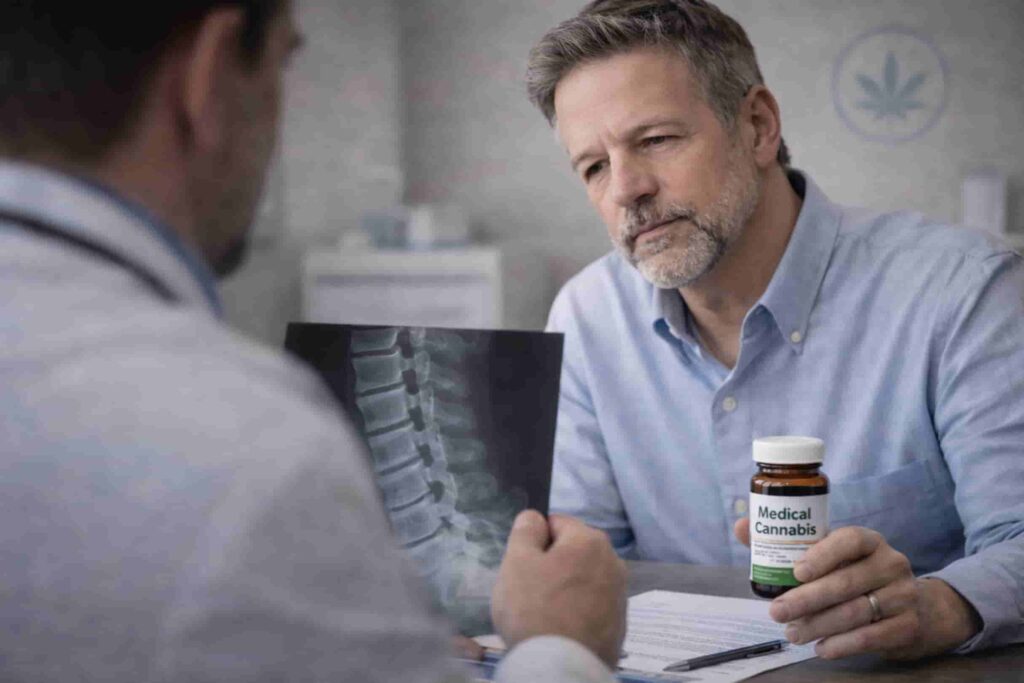
Spinal stenosis is a common and often life-altering condition, especially in older adults. It occurs when the spaces within the spine narrow, placing pressure on the spinal cord or nerve roots. For many patients, this leads to chronic pain, numbness, tingling, weakness, and difficulty standing or walking for long periods. Over time, spinal stenosis can significantly limit mobility, independence, sleep quality, and overall quality of life.
While surgery can be helpful for select patients, many people with spinal stenosis are managed conservatively for years. Unfortunately, standard medical treatments often provide incomplete relief or introduce new risks. As a result, patients increasingly ask whether medical cannabis may offer a safer, more tolerable option for long-term symptom management.
Understanding Spinal Stenosis Symptoms
The symptoms of spinal stenosis vary depending on the location and severity of nerve compression. Common complaints include:
- Chronic low back or neck pain
- Burning, aching, or shooting pain in the arms or legs
- Numbness or tingling in the extremities
- Muscle weakness or heaviness in the legs
- Pain that worsens with standing or walking and improves with sitting or bending forward
-
Sleep disruption due to pain and discomfort
These symptoms are often persistent rather than episodic, making long-term pain control a central goal of treatment.
Limitations of Conventional Treatments
Traditional management of spinal stenosis typically includes physical therapy, anti-inflammatory medications, muscle relaxants, nerve pain medications, steroid injections, and, in more severe cases, opioids or surgery.
While these treatments may help some patients, they often fall short:
- NSAIDs can irritate the stomach, kidneys, and cardiovascular system with chronic use.
- Neuropathic pain medications may cause sedation, dizziness, or cognitive effects.
- Opioids carry well-known risks of dependence, tolerance, constipation, hormonal disruption, and overdose.
-
Epidural steroid injections may provide temporary relief but do not address ongoing nerve irritation.
Many patients find themselves cycling through medications that blunt symptoms without restoring function or improving sleep.
The Endocannabinoid System and Spinal Pain
Medical cannabis works through the endocannabinoid system (ECS)—a regulatory network involved in pain perception, inflammation, nerve signaling, and muscle tone. Cannabinoid receptors are present throughout the central and peripheral nervous systems, including areas directly involved in spinal pain.
By influencing this system, cannabinoids may help modulate how pain signals are generated, transmitted, and interpreted by the brain.
Cannabis and Nerve-Related Pain
Spinal stenosis pain is often neuropathic in nature. Unlike simple muscle pain, nerve pain can feel burning, electric, or deep and aching. This type of pain is notoriously resistant to standard analgesics.
Cannabinoids may help by:
- Reducing abnormal nerve firing
- Modulating pain signal transmission in the spinal cord
- Decreasing central pain sensitization
-
Supporting more balanced nervous system activity
Many patients report that cannabis reduces the intensity and persistence of nerve pain rather than merely masking it.
Anti-Inflammatory Effects
Inflammation plays a significant role in the development of spinal stenosis symptoms. Swollen tissues around compressed nerves can worsen pain and neurological symptoms.
Certain cannabinoids, particularly CBD and minor cannabinoids, may have anti-inflammatory properties. By reducing inflammatory signaling, cannabis may help lessen nerve irritation and secondary pain, especially during flare-ups.
Muscle Relaxation and Mobility
Muscle tightness and spasms often accompany spinal stenosis as the body attempts to protect irritated nerves. This guarding can further restrict movement and worsen pain.
Medical cannabis may support:
- Muscle relaxation
- Reduced spasms and stiffness
- Improved comfort during movement
-
Greater tolerance for physical therapy and daily activity
Improved mobility often translates into better long-term outcomes, even when structural narrowing remains unchanged.
Sleep Improvement as a Key Benefit
Sleep disruption is one of the most overlooked consequences of spinal stenosis. Pain that worsens at night, difficulty finding a comfortable position, and frequent awakenings all contribute to poor sleep.
Cannabis may improve sleep by:
- Reducing nighttime pain and discomfort
- Calming the nervous system
- Helping patients fall asleep more naturally
-
Supporting longer, more continuous sleep
Better sleep often leads to improved daytime pain tolerance, mood, and function, creating a positive feedback loop.
Cannabis vs. Opioids for Spinal Stenosis
Many patients with spinal stenosis are prescribed opioids at some point. While opioids can reduce pain intensity, they do not address inflammation or nerve dysfunction and may worsen sleep quality over time.
In contrast, cannabis may offer:
- Lower risk of respiratory depression
- Less physical dependence
- No known fatal overdose risk when used alone
-
Fewer long-term systemic side effects
Some patients are able to reduce or eliminate opioid use when cannabis is introduced thoughtfully under medical supervision.
Individualized Treatment Matters
Not all cannabis products are the same, and spinal stenosis patients often benefit from individualized regimens. Important factors include:
- THC-to-CBD ratio
- Presence of minor cannabinoids
- Delivery method (oral, vaporized, topical)
-
Timing and dose
Lower doses may be sufficient for nerve pain and sleep, while higher doses are not always better and may cause side effects.
A Complement, Not a Cure
It is important to be clear: medical cannabis does not reverse spinal stenosis or “fix” structural narrowing. Its role is symptom management—helping patients live more comfortably, sleep better, and function more fully.
When combined with physical therapy, activity modification, weight management, and other conservative strategies, cannabis may be a valuable part of a comprehensive care plan.
Final Thoughts
Spinal stenosis is a chronic condition that requires long-term management, not just short-term pain relief. Many patients find themselves caught between inadequate symptom control and medications that carry unacceptable risks.
Medical cannabis offers a different approach—one that targets pain, inflammation, nerve irritation, muscle tension, and sleep disruption through the body’s own regulatory systems. For appropriately selected patients, it may provide meaningful relief with a more favorable safety profile than many conventional options.
As with any therapy, success depends on proper evaluation, education, and ongoing guidance. When used responsibly, medical cannabis may help patients with spinal stenosis reclaim comfort, mobility, and quality of life.
Disclaimer: This article is for educational purposes only and is not a substitute for professional medical advice, diagnosis, or treatment. Always consult a qualified healthcare provider with any questions about your health or medical conditions.

Dr. Nicholas Marsh is board-certified by the American Board of Anesthesiologists and has over 37 years of healthcare experience. Recognized by FindaTopDoc.com for clinical excellence, he now focuses on educating, supporting, and certifying patients for medical cannabis.