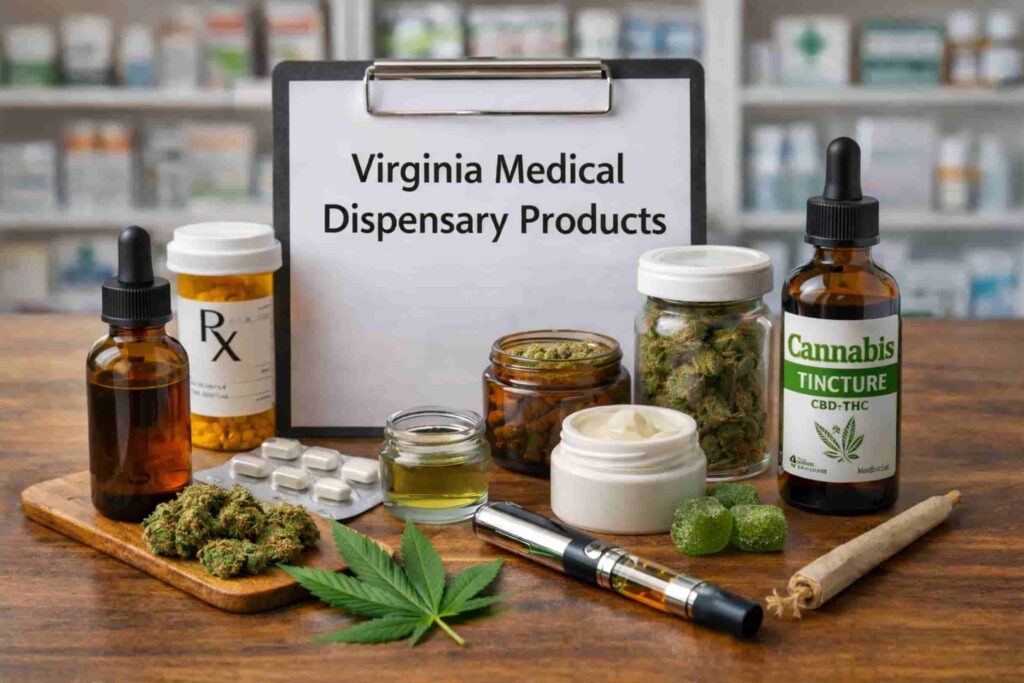
If you’re a medical cannabis patient in Virginia, one of the most common questions you’ll hear is: “What kinds of products are actually available at dispensaries?” Legal medical marijuana dispensaries in the Commonwealth offer a wide variety of products to suit different conditions, preferences, and daily routines. Whether you’re new to cannabis or have used it before, knowing your options helps you make informed choices for your health and comfort.
In this guide, we’ll walk through the main product categories you’ll find at Virginia medical dispensaries — what they are, how they work, and how they fit into your treatment plan.
The Legal Context in Virginia
Before we dive into product types, it’s helpful to understand how Virginia’s medical cannabis system works. Only patients with a valid written certification from a licensed medical practitioner can legally buy medical marijuana products from a licensed dispensary. Recreational marijuana sales are not yet legal in dispensaries in Virginia, so these products are specifically intended for medical use.
Need to get certified? No problem. Just CLICK HERE to request an appointment with a ReThink-Rx medical cannabis practitioner.
Licensed dispensaries are regulated for quality and safety, so products are tested for potency and made available in consistent formats.
1. Cannabis Flower
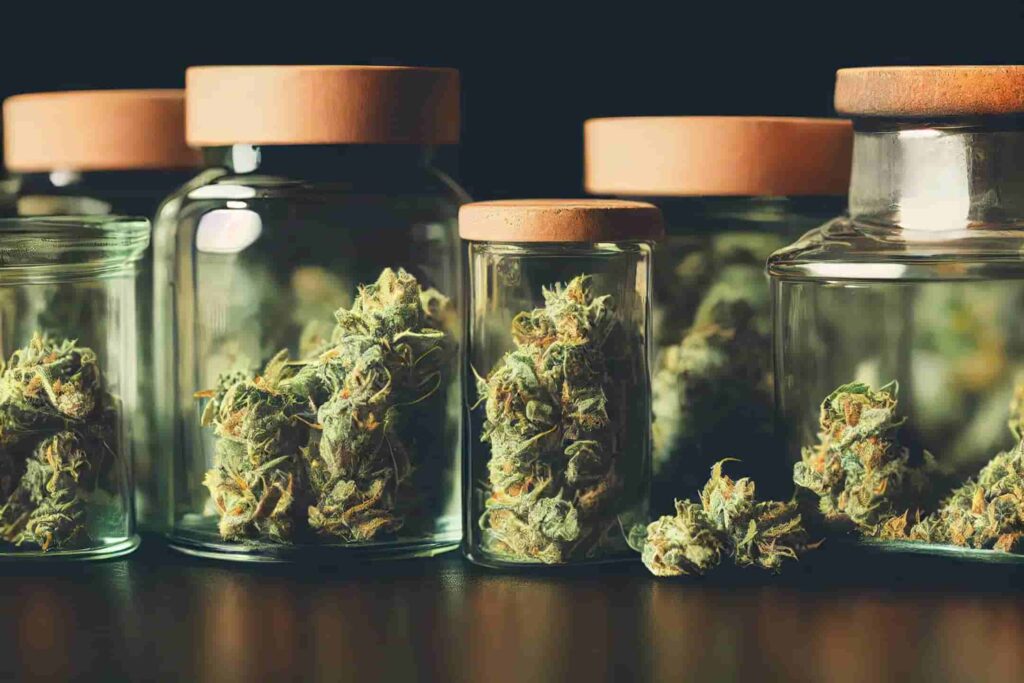
Cannabis flower — sometimes called “buds” — is the dried part of the cannabis plant that patients can smoke or vaporize. It’s the most traditional form of medical marijuana.
- Why it’s popular: Flower delivers relief quickly, often within minutes.
- How it’s used: Many patients use a dry-herb vaporizer to reduce irritation compared to smoking.
-
Strain options: You’ll find a range of indica, sativa, and hybrid strains with different terpene and cannabinoid profiles to help target specific symptoms.
Some dispensaries also sell pre-rolled joints — ready-to-use flower rolled for convenience.
2. Vape Pens and Cartridges
For patients who want fast relief without smoking, vape pens and cartridges are a common choice.
- What they are: Small devices that heat cannabis oil into a vapor you inhale.
- Benefits: They work quickly, are discreet, and allow controlled dosing.
-
Options: You’ll see a range of strains, flavors, and THC/CBD ratios.
These products are often easier for patients with mobility issues or lung sensitivities to use than flower.
3. Tinctures and Oils
Tinctures are liquid cannabis extracts typically taken under the tongue (sublingually) using a dropper.
- How they work: Placed under the tongue, they absorb into the bloodstream relatively quickly — often within 20 to 30 minutes.
- Why patients like them: They offer precise dosing and are discreet and smoke-free.
-
Flexibility: Some patients add tincture drops to food or beverages if they prefer.
Tinctures are especially helpful for patients who want missed dosing to be easier to manage or who don’t want inhaled products.
4. Edibles
Edibles are cannabis-infused foods that deliver effects more slowly but last longer than many other products.
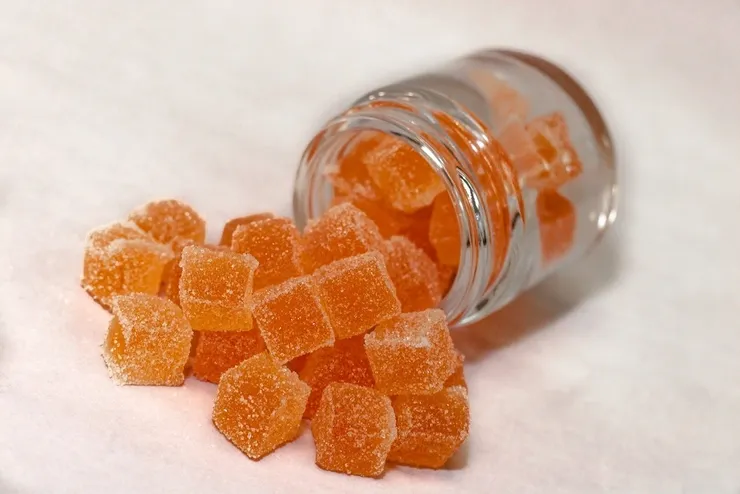
- Forms you’ll see: Gummies, lozenges, tablets, and other dissolvable products.
- How they work: Edibles are processed through the digestive system, so it can take 30 minutes to 2 hours before effects begin.
-
Good for: Long-lasting relief, particularly overnight symptoms.
Because edibles take longer to kick in, patients are encouraged to start with a low dose and wait before taking more.
5. Concentrates and Extracts
Concentrates are highly potent forms of cannabis created by extracting cannabinoids from the plant.
- Types include: Oils, waxes, shatter, live resin, and more.
- Why they matter: These are stronger products that can provide relief for more severe symptoms.
-
How they’re used: Typically with specialized devices, like dab rigs or vape pens.
Concentrates allow some patients to achieve symptom relief with smaller quantities, but they require careful dosing.
6. Topicals
Topicals include creams, balms, lotions, and patches that are applied directly to the skin.
- How they work: Cannabinoids interact with local cannabinoid receptors in the skin and peripheral tissues without entering the bloodstream.
- Ideal use: Localized pain, soreness, inflammation, and joint stiffness.
-
Key benefit: They don’t produce a “high,” making them appealing to patients who want focused relief.
Topicals don’t affect your whole body the way inhaled or ingested products do, making them a gentler option for muscle and joint discomfort.
7. Capsules and Pills
If you want a form that resembles traditional medicine, capsules and pills are available.
- Benefits: Easy to swallow, discreet, and provides consistent dosing.
- Timing: Effects are similar to edibles—slower onset and longer duration.
-
Consistency: They’re ideal for patients who prefer not to measure or guess doses.
Capsules are often suggested for nighttime use or for patients who want a predictable effect.
8. Specialty and Novel Products
Some dispensaries also offer specialty items, such as CBD-dominant products or unique delivery methods.
-
Examples can include CBD-infused bath products, wellness creams, or other innovative formulas designed for relaxation or skin care.
These products can complement traditional cannabis therapies, particularly for systemic inflammation or stress-related symptoms.
Choosing the Right Product for You
Because every patient’s needs are different, it’s important to think about:
- How quickly you need relief: Inhaled products work fast; edibles take longer but last longer.
- Your symptom patterns: Local pain vs. whole-body symptoms vs. overnight discomfort.
-
Your lifestyle: Discretion, ease of use, and dosing precision all matter.
Licensed dispensary staff, including pharmacists, can help you understand the differences and suggest options based on your goals and experience level. They will explain the purchase limits and suggest strategies for optimizing your purchases.
Safety and Quality Assurance
Products at Virginia dispensaries are tested for quality and potency, ensuring you receive consistent cannabinoid levels. Regulations also limit the maximum THC per serving — generally up to 10 mg per dose in medical products — so patients can make safer decisions.
As always, start with a low dose and go slow — especially if you’re new to medical marijuana — and consult your medical provider with questions or concerns.
Final Thoughts
Understanding the types of products available at Virginia medical marijuana dispensaries empowers you to choose the formats that work best for your health goals and daily life. From flower and vapes for rapid relief to tinctures, edibles, topicals, and capsules for more targeted or sustained effects, the options are diverse and patient-oriented.
Explore with confidence, ask questions, and remember that the right product for someone else may not be the right one for you — and that’s okay. Your path to comfort is personal, and Virginia’s medical cannabis system is designed to support that journey.

Dr. Nicholas Marsh is board-certified by the American Board of Anesthesiologists and has over 37 years of healthcare experience. Recognized by FindaTopDoc.com for clinical excellence, he now focuses on educating, supporting, and certifying patients for medical cannabis.