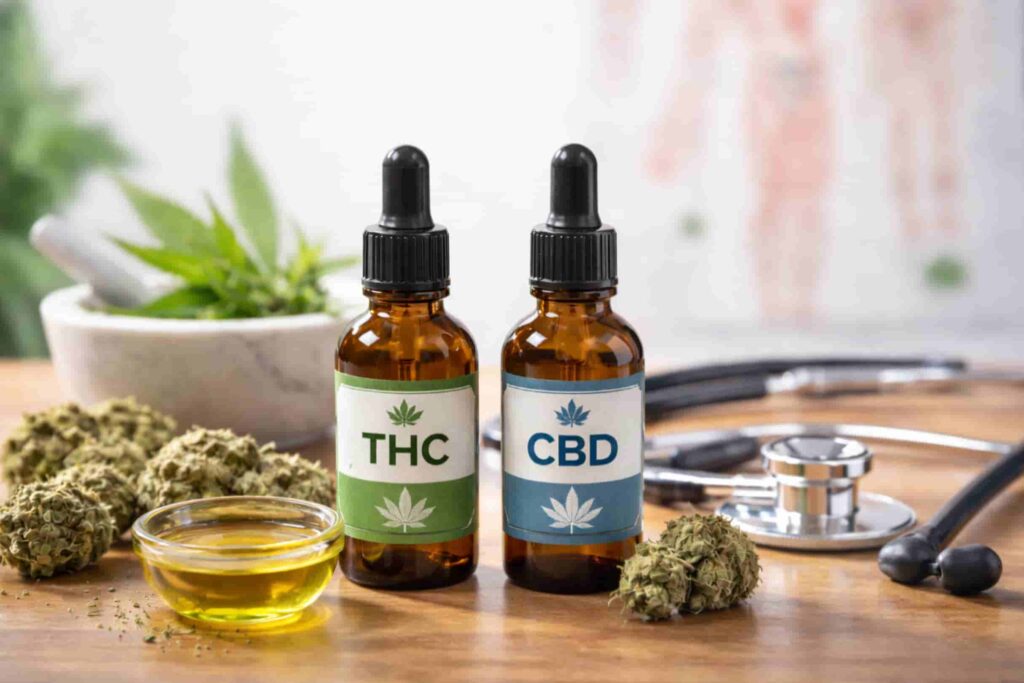
Medical cannabis is often discussed as if it were a single medication, but in reality, it is a complex plant with dozens of active compounds. Two of the most important—and most talked about—are THC (tetrahydrocannabinol) and CBD (cannabidiol). While they come from the same plant, they act very differently in the body and serve different medical purposes.
Patients often ask a simple question: “Is THC better than CBD, or vice versa?” The honest answer is that it depends on the condition being treated, the patient’s goals, and their sensitivity to side effects. In many cases, the greatest benefit comes not from choosing one over the other, but from using them together in a thoughtful, evidence-based manner.
This article breaks down the key differences between THC and CBD, how each works, what conditions they may help, and how patients can make informed choices about their care.
What Are THC and CBD?
THC and CBD are cannabinoids, naturally occurring compounds found in the cannabis plant. They both interact with the body’s endocannabinoid system (ECS)—a network of receptors involved in regulating pain, mood, sleep, appetite, inflammation, and immune function.
Despite their shared origin, their effects differ markedly.
THC (Tetrahydrocannabinol)
- Primary psychoactive compound in cannabis
- Responsible for the “high” associated with marijuana
-
Strongly binds to CB1 receptors in the brain
CBD (Cannabidiol)
- Non-intoxicating
- Does not produce a high
-
Works indirectly on the ECS and other signaling systems
Understanding this distinction is key to understanding how each may help or hinder specific medical conditions.
How THC Works in the Body
THC primarily activates CB1 receptors, which are found in high concentrations in the brain and central nervous system. This explains both its therapeutic effects and its side effects.
Potential Medical Benefits of THC
THC may be particularly helpful for conditions involving:
- Chronic pain, especially neuropathic pain
- Muscle spasticity, such as in multiple sclerosis
- Nausea and vomiting, including chemotherapy-related symptoms
- Loss of appetite and wasting syndromes
-
Sleep disorders, particularly difficulty staying asleep
THC can also improve mood and reduce pain perception, which may be valuable for patients with complex or treatment-resistant conditions.
Common Side Effects of THC
While effective, THC is not without downsides:
- Impaired short-term memory
- Anxiety or paranoia (especially at higher doses)
- Increased heart rate
-
Dizziness or sedation
These effects are dose-dependent and vary widely among patients. Careful titration is essential.
How CBD Works in the Body
CBD does not directly activate CB1 receptors. Instead, it indirectly influences the endocannabinoid system and interacts with other pathways involved in inflammation, serotonin signaling, and the stress response.
Potential Medical Benefits of CBD
CBD is often favored for conditions involving:
- Anxiety disorders
- Inflammation and autoimmune conditions
- Seizure disorders
- Chronic pain, especially inflammatory pain
-
Sleep disturbances related to anxiety or pain
Because it does not cause intoxication, CBD is often attractive to patients who want symptom relief without cognitive impairment.
Common Side Effects of CBD
CBD is generally well-tolerated, but side effects may include:
- Fatigue
- Dry mouth
- Gastrointestinal upset
-
Interactions with certain medications (via liver enzymes)
While often described as “safe,” CBD should still be used under medical guidance, especially in patients on multiple prescriptions.
THC vs. CBD: Which Conditions Respond Best?
Pain Conditions
- THC is often more effective for severe or nerve-related pain
- CBD may help with inflammatory pain and reduce pain-related anxiety
-
Combination therapy often provides the best overall relief
Anxiety and Mood Disorders
- CBD is usually preferred due to its calming effects
-
THC may worsen anxiety at higher doses, but can help mood at low doses
Sleep Disorders
- THC may help patients fall and stay asleep
- CBD may improve sleep by reducing pain or anxiety
-
Balanced ratios can improve sleep quality without heavy sedation
Neurological Conditions
- CBD has strong evidence in certain seizure disorders
-
THC may help with spasticity, tremor, and pain
Appetite and Nausea
- THC is clearly superior for appetite stimulation and nausea control
-
CBD plays a supportive role but is less potent in this area
The Entourage Effect: Why THC and CBD Often Work Better Together
Cannabis medicine is rarely about choosing THC or CBD. Instead, many patients benefit from both through the entourage effect.
CBD can:
- Reduce THC-related anxiety
- Smooth out psychoactive effects
-
Enhance therapeutic benefits
THC can:
- Amplify pain relief
- Improve sleep and appetite
-
Provide symptom control when CBD alone is insufficient
Different ratios (such as 1:1, 2:1 CBD:THC, or THC-dominant formulations) can be tailored to the patient’s needs and tolerance.
Safety Considerations and Individual Sensitivity
Not all patients respond the same way to cannabinoids. Factors that matter include:
- Age
- Body chemistry
- Prior cannabis exposure
- Mental health history
-
Other medications
THC should be used cautiously in:
- Patients with a history of psychosis
- Those prone to severe anxiety
-
Older adults sensitive to sedation or dizziness
CBD is often a safer starting point, but it is not completely risk-free. Medical supervision helps ensure safer outcomes and better results.
THC, CBD, and Medical Guidance
One of the biggest misconceptions about medical cannabis is that it is “one-size-fits-all.” In reality, dosing, ratios, and timing matter just as much as they do with traditional medications.
A proper medical evaluation helps:
- Match cannabinoids to the condition
- Minimize side effects
- Avoid drug interactions
-
Adjust treatment as symptoms change
This is especially important for patients using cannabis as an alternative or adjunct to prescription medications.
Final Thoughts: THC vs. CBD Is Not a Competition
THC and CBD are not rivals—they are tools. Each has strengths, limitations, and ideal use cases. For some patients, CBD alone is sufficient. For others, THC provides relief that nothing else can. And for many, the greatest benefit comes from using both together in carefully selected ratios.
Medical cannabis works best when it is treated like medicine: personalized, monitored, and adjusted over time. Understanding the difference between THC and CBD is the first step toward using cannabis more safely and effectively for real medical conditions.
Disclaimer: This article is for educational purposes only and does not replace professional medical advice. Medical cannabis should be used under the guidance of a qualified healthcare provider.

Dr. Nicholas Marsh, DO is a board-certified anesthesiologist with over 37 years of healthcare experience. A graduate of the New York College of Osteopathic Medicine, he has served as an attending anesthesiologist at Inova Loudoun Hospital Center since 1992 and previously served as chairman and medical director of Anesthesia Services at a major Virginia medical center. Recognized by FindaTopDoc.com for clinical excellence, Dr. Marsh founded ReThink-Rx in 2021, where he focuses on educating, supporting, and certifying patients for medical cannabis.