
After nearly four decades in medicine—much of it spent guiding patients safely into and out of anesthesia—I have great respect for the delicate balance between wakefulness and sleep. Sleep is not simply “turning off.” It is an active, complex neurologic process.
Today, in my medical cannabis practice, one of the most common concerns I hear is:
“Doctor, I just want to sleep through the night.”
Let’s take a deeper look at how medical marijuana may help with sleep, which strains are commonly most useful, how terpenes matter more than many people realize, and why sleep hygiene remains the foundation of good rest.
Why Cannabis May Help with Sleep
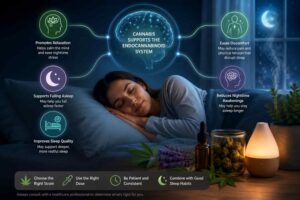
The body has a built-in system called the endocannabinoid system (ECS). This system helps regulate mood, pain, inflammation, and sleep cycles. THC and CBD interact with cannabinoid receptors in the brain and nervous system, influencing sleep onset and sleep stability.
In simple terms:
- THC may help people fall asleep faster and may reduce nighttime awakenings.
- CBD may calm anxiety and racing thoughts that interfere with sleep.
- Balanced formulations often work best.
In my experience, cannabis is particularly helpful when insomnia is driven by:
- Chronic pain
- Anxiety or stress
- Muscle tension
- PTSD-related sleep disruption
It is not a universal cure for insomnia. But when carefully selected and dosed, it can be a valuable tool.
The Best Strains for Sleep — And Why They Work

Modern cannabis is highly hybridized. Still, certain strains consistently produce effects that support sleep. The key is not just whether something is labeled “Indica,” but why it produces sedation.
Here’s a closer look at some strains I often discuss with patients.
Granddaddy Purple
This classic Indica-dominant strain is well known for deep body relaxation.
Why it may help:
- Often high in myrcene, a terpene associated with sedation
- Produces strong muscle relaxation
- Helps patients with nighttime pain or muscle tightness
Patients with arthritis, fibromyalgia, or back pain often report that this strain helps “settle the body,” which makes falling asleep easier.
Northern Lights
Northern Lights is one of the most historically reliable strains for insomnia.
Why it may help:
- Consistent sedating effects
- Calming mental activity
- Moderate-to-high THC content that promotes sleep onset
This strain tends to quiet mental chatter. Patients who describe “a busy brain at bedtime” often do well with this type of profile.
Bubba Kush
Bubba Kush is particularly helpful for stress-related insomnia.
Why it may help:
- Strong body-heavy relaxation
- Calming, almost tranquil sensation
- Often rich in myrcene and caryophyllene
Patients who feel physically tense or emotionally wound up at night often find Bubba Kush soothing without excessive stimulation.
Ice Cream Cake
This Indica-leaning hybrid is helpful when anxiety and mental overactivity prevent sleep.
Why it may help:
- Relaxing but not overly sedating
- Can ease intrusive thoughts
- Balanced terpene profile that promotes calm
Some patients want to relax without feeling “knocked out.” This type of hybrid may offer that middle ground.
ACDC (High CBD)
Not all sleep problems require strong THC.
Why it may help:
- High CBD content
- Minimal intoxication
- Reduces anxiety without cognitive fog
Patients who are sensitive to THC or concerned about psychoactive effects often do better starting here.
Harlequin (Balanced THC/CBD)
Balanced strains can offer gentle sedation with fewer side effects.
Why it may help:
- CBD moderates THC’s intensity
- Reduces anxiety
- Less next-day grogginess
In my experience, balanced strains are often ideal for older adults or those new to cannabis.
Terpenes: The Overlooked Sleep Influencers
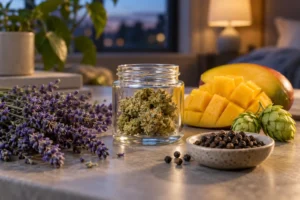
If cannabinoids are the engine of cannabis, terpenes are the steering wheel.
Terpenes are aromatic compounds found in cannabis and many other plants. Lavender, pine needles, citrus peel—these all contain terpenes. In cannabis, they strongly influence the overall effect.
Here are the key sleep-related terpenes:
Myrcene
- Found in mango and hops
- Strongly associated with sedation
- Promotes muscle relaxation
Strains high in myrcene are often described as “couch-lock” strains. For patients with pain or physical restlessness, this can be beneficial at bedtime.
Linalool
- Also found in lavender
- Calming and anti-anxiety properties
- May reduce stress response
If anxiety is the main driver of insomnia, linalool-rich strains are often helpful.
Beta-Caryophyllene
- Found in black pepper
- May reduce inflammation
- Interacts with CB2 receptors
Patients with inflammatory pain may benefit from strains containing this terpene.
Terpene Synergy
A 2025 randomized study of a CBD-terpene formulation showed measurable increases in deep and REM sleep in some individuals with insomnia. Interestingly, the benefit appeared stronger in those with low baseline deep sleep. This reinforces something many clinicians suspect: terpenes matter.
When evaluating cannabis for sleep, I encourage patients to look beyond THC percentage and ask about terpene profiles.
Choosing the Right Form for Sleep
The delivery method changes how cannabis affects sleep.
- Vaporized cannabis works quickly and is helpful for falling asleep. Effects may last 2 to 4 hours.
- Oral tinctures or oils take longer to start but last 6 to 8 hours. These are often better for staying asleep.
- Edibles last even longer but are harder to dose precisely.
For many patients, a low-dose oral formulation taken 60 to 90 minutes before bed provides steady nighttime support.
Sleep Hygiene: The Foundation That Makes Everything Work Better
Even the best strain cannot overcome poor sleep habits.
As an anesthesiologist, I understand how sensitive the brain is to light, timing, and routine. The body thrives on rhythm.
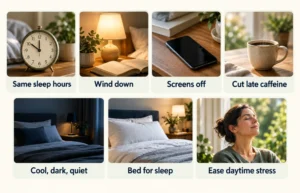
Here are the pillars of strong sleep hygiene:
1. Consistent Sleep Schedule
Go to bed and wake up at the same time every day—even on weekends. The brain’s internal clock (circadian rhythm) depends on consistency.
2. Create a Wind-Down Routine
The brain needs transition time.
- Dim lights 60 minutes before bed
- Avoid intense conversations
- Practice breathing exercises
- Read something calming
Think of it as preparing the brain for landing.
3. Limit Screen Exposure
Blue light from phones and tablets suppresses melatonin. Ideally:
- Avoid screens for at least one hour before bed
- Use night-mode filters if necessary
4. Manage Caffeine and Alcohol
- Avoid caffeine after early afternoon
- Limit alcohol at night
Alcohol may make you sleepy, but it disrupts deeper sleep stages.
5. Optimize the Bedroom Environment
- Keep the room cool
- Make it dark
- Reduce noise
- Use comfortable bedding
Your bedroom should signal sleep—not work, television, or stress.
6. Use the Bed Only for Sleep
Avoid scrolling, emailing, or watching TV in bed. The brain forms associations quickly. Protect the bed as a sleep-only space.
7. Address Stress During the Day
Unresolved stress shows up at bedtime.
- Exercise regularly
- Practice mindfulness
- Keep a worry journal
- Engage in relaxing hobbies
Cannabis may calm anxiety, but long-term sleep health depends on stress management skills.
A Balanced, Realistic Perspective

The research on cannabis and sleep continues to evolve. Some studies show improvements in subjective sleep quality. Objective sleep architecture data are more mixed. As with many therapies, individual response varies.
In my clinical experience, medical cannabis works best when:
- Carefully matched to the patient’s symptoms
- Started at low doses
- Adjusted gradually
- Combined with good sleep hygiene
It should not replace healthy sleep habits—but it may complement them.
Final Thoughts
Sleep is foundational to physical health, emotional stability, and resilience.
After decades in medicine, I have learned this: powerful compounds require thoughtful use. Cannabis is no exception.
When chosen carefully—considering strain, cannabinoid balance, terpene profile, and delivery method—medical marijuana can be a helpful tool for patients struggling with sleep.
But it works best as part of a bigger plan—one that respects the biology of sleep and supports the nervous system rather than overpowering it.
If you are struggling with sleep and wondering whether medical cannabis may help, a structured, medically guided evaluation is the right first step. Sleep is too important to approach casually.
And when we restore sleep, we often restore much more than that.
Disclaimer: This article is for educational purposes only and is not a substitute for professional medical advice, diagnosis, or treatment. Always consult a qualified healthcare provider with any questions about your health or medical conditions.

Dr. Marsh, is a board-certified anesthesiologist with over 37 years of healthcare experience. A graduate of Syracuse University, the New York College of Osteopathic Medicine, and Rutgers University Medical School, he has earned recognition from FindaTopDoc.com for clinical excellence. Dr. Marsh founded ReThink-Rx in 2021, where he now focuses on educating, supporting, and certifying patients for medical cannabis.