For many years, Virginia medical cannabis patients found themselves caught between conflicting state and federal laws. A patient could legally obtain medical cannabis through Virginia’s regulated program while simultaneously facing uncertainty about firearm ownership, firearm purchases, and concealed carry rights under federal law.
In 2026, the legal landscape started to change dramatically.
Several major federal developments—including the rescheduling of medical cannabis to Schedule III, proposed revisions to ATF Form 4473, and a landmark Supreme Court decision affirming Second Amendment protections for cannabis consumers—have begun reshaping the relationship between medical cannabis and firearm ownership.
While some regulatory questions remain unresolved, 2026 may ultimately be remembered as the year federal policy finally began catching up with reality.
For Virginia patients, these changes could have significant implications for firearm ownership, concealed handgun permits, and the decision to participate in the Commonwealth’s medical cannabis program.
The Historical Conflict Between Medical Cannabis and Firearms
To understand why these recent developments are so important, it helps to understand the legal conflict that existed for decades.
Virginia has operated a legal medical cannabis program for years. Qualified patients can obtain a medical cannabis certification, purchase products from licensed dispensaries, and use cannabis under the supervision of healthcare professionals.
Federal law, however, traditionally took a very different view.
Because cannabis was classified as a Schedule I controlled substance, federal firearm regulations generally treated cannabis consumers as prohibited persons. This created confusion and concern for many patients who were otherwise responsible, law-abiding firearm owners.
Hunters, sport shooters, veterans, collectors, and concealed carry permit holders frequently found themselves asking the same question:
“Can I legally use medical cannabis and still own a firearm?”
Unfortunately, the answer was often unclear.
Many patients avoided medical cannabis altogether because they feared losing their firearm rights.
Change #1: Medical Cannabis Was Rescheduled to Schedule III
The first major development occurred in April 2026 when the U.S. Department of Justice moved state-authorized medical cannabis from Schedule I to Schedule III of the Controlled Substances Act.
This was one of the most significant federal cannabis reforms in modern American history.
For decades, Schedule I status placed cannabis in the same legal category as substances considered to have no accepted medical use.
The Schedule III designation acknowledges something that patients, physicians, and researchers have known for years: cannabis has legitimate medical applications and should not be treated the same as substances lacking recognized therapeutic value.
For medical cannabis patients, the change represented more than symbolism. It established the foundation for broader federal reforms involving healthcare, research, employment protections, and firearm regulations.
Importantly, the federal government was now officially recognizing a distinction between medical cannabis and recreational marijuana.
Change #2: The ATF Proposed Major Revisions to Form 4473
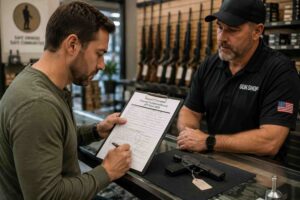
The second major development came when the Bureau of Alcohol, Tobacco, Firearms and Explosives (ATF) proposed revisions to Form 4473.
For those unfamiliar with the process, Form 4473 is the federal firearm transaction record completed when purchasing a firearm from a licensed firearms dealer.
Historically, the form contained language specifically warning that marijuana remained illegal under federal law regardless of state legalization.
This language effectively treated medical cannabis patients and recreational marijuana users the same, and categorized them as unauthorized.
Following the rescheduling order, ATF proposed revisions that reflected the new federal status of state-authorized medical cannabis.
While the proposal is still undergoing review, it represents a significant shift in federal policy.
Rather than automatically categorizing all cannabis consumers as prohibited firearm purchasers, the proposed language changes recognize that state-authorized medical cannabis now occupies a different legal position.
Although the final regulatory language remains under development, many legal observers viewed the proposal as a signal that broader changes were likely on the horizon.
Then came an even bigger development.
Change #3: The Supreme Court Steps In
On June 18, 2026, the United States Supreme Court issued what may become the most important cannabis-related firearms decision in history.
In United States v. Hemani, the Court ruled that the federal government’s categorical ban on firearm ownership by individuals with a history of marijuana use violated the Second Amendment.
The ruling represented a major victory for cannabis consumers and constitutional rights advocates.
The Court rejected the argument that marijuana users should automatically be considered dangerous or disqualified from exercising their constitutional rights.
In its opinion, the Court criticized the government’s position that a person could be permanently deprived of Second Amendment protections simply because they used cannabis.
The majority noted that the government had failed to demonstrate that cannabis users are categorically dangerous or unusually prone to violence.
Instead, the Court emphasized that constitutional rights cannot be stripped away based on stereotypes or assumptions.
The decision reinforced a principle that many legal scholars have argued for years: constitutional rights belong to individuals, not government classifications.
For medical cannabis patients, the ruling was particularly significant because it directly challenged the legal foundation that had historically been used to justify firearm restrictions.
What Does the Supreme Court Hemani Decision Mean for Virginia Patients?
The Supreme Court’s decision has a substantial practical impact.
For years, patients often worried that obtaining a medical cannabis certification could jeopardize their ability to purchase or possess firearms.
The Court’s ruling strongly suggests that cannabis use alone is not sufficient justification for denying Second Amendment rights.
That does not mean every legal question has been resolved.
Federal agencies still need to update policies and regulations to align with the Court’s decision.
In fact, immediately following the ruling, ATF announced that it was reviewing the decision and evaluating its impact on existing firearm regulations.
Additional guidance is expected in the coming months.
However, the direction is clear.
The Supreme Court has signaled that broad categorical restrictions targeting cannabis consumers are unlikely to withstand constitutional scrutiny.
What About Concealed Carry Permits?
Concealed handgun permits remain an important topic for many Virginia patients.
Virginia is a shall-issue state, and many medical cannabis patients are also interested in concealed carry permit holders.
Historically, uncertainty about federal firearm laws created understandable concern about holding a permit.
The combination of the Schedule III rescheduling, the proposed ATF revisions, and the Supreme Court’s decision now may create a much more favorable legal environment.
While Virginia’s concealed carry laws themselves have not changed, the federal legal obstacles that created uncertainty for cannabis patients appear to be weakening. Many legal experts believe that concealed carry permit holders who want to participate in state medical cannabis programs now stand on stronger constitutional ground than they did only a few years ago.
Nevertheless, until the laws change definitively, patients should continue to comply with all state and federal laws as written and remain attentive to future guidance from regulatory agencies.
Suggested Reading: Will a Medical Card Show up on a Background Check
Why These Changes Matter for Virginia Medical Cannabis Patients
Virginia remains a medical-only cannabis market. Medical cannabis remains the primary legal pathway for purchasing cannabis products through licensed dispensaries in the Commonwealth.
For years, some patients delayed obtaining a medical cannabis certification because of concerns regarding firearm ownership. Those concerns were understandable. The legal environment was confusing, inconsistent, and often contradictory. Developments in 2026 have begun to change that reality.
Today, patients can point to:
- Federal recognition of medical cannabis through Schedule III rescheduling
- Proposed ATF reforms reflecting the new legal status of medical cannabis
- A Supreme Court decision affirming Second Amendment protections for cannabis consumers
- Growing judicial recognition that medical cannabis patients should not automatically lose constitutional rights
Taken together, these developments represent one of the most significant shifts in cannabis policy since state medical marijuana programs first emerged.
What Happens Next?
Although 2026 has brought remarkable progress, additional changes are likely. Several issues remain unresolved.
- Federal agencies must update regulations to reflect both the Schedule III rescheduling and the Supreme Court’s ruling.
- ATF is expected to issue additional guidance regarding Form 4473 and firearm transactions.
- Future court decisions are needed to further clarify the rights of medical cannabis patients.
- Congress may also consider legislation addressing the relationship between state-authorized medical cannabis and federal firearm regulations.
For patients, the most important takeaway is that the trend is moving toward greater recognition of both medical cannabis rights and constitutional protections.
Frequently Asked Questions
Can I legally buy a firearm if I have a Virginia medical marijuana certification?
The answer is evolving. A proposed ATF revision would remove language that automatically treats medical cannabis patients as prohibited purchasers, but the change is not yet finalized. Current federal rules remain in effect until the revision is officially adopted.
Does having a medical cannabis card automatically cancel my concealed carry permit?
No. Virginia does not automatically revoke concealed handgun permits because a person obtains a medical cannabis certification. However, firearm laws involve both state and federal considerations, so patients should stay informed about current regulations and abide by them.
Has medical cannabis been legalized federally?
Not entirely. In 2026, state-authorized medical cannabis was moved to Schedule III, while recreational cannabis remains subject to different federal restrictions. It is important to note that the Supreme Court Hemani decision applies to both medical and recreational cannabis.
Why is ATF changing Form 4473?
The proposed changes reflect the federal government’s recognition that state-authorized medical cannabis no longer fits the same legal category as recreational marijuana following the Schedule III rescheduling order.
Should I wait to get a medical cannabis certification because of firearm concerns?
Every patient situation is unique. However, recent federal developments suggest that protections for medical cannabis patients are moving in a positive direction. Patients who may benefit from medical cannabis should discuss treatment options with a qualified medical cannabis provider and stay informed as federal regulations continue to evolve. If a patient wants to continue exercising their Second Amendment right to firearm ownership, they should do so within current law.
Can a Virginia medical cannabis patient own a firearm?
The Supreme Court’s 2026 decision significantly strengthened the legal position of cannabis consumers regarding firearm ownership. However, regulatory guidance continues to evolve, and patients should remain informed about future federal updates.
Can I buy a firearm if I have a medical cannabis certification?
Federal policy is currently undergoing revision. Proposed ATF changes to Form 4473 and the Supreme Court’s ruling suggest a more favorable environment for medical cannabis patients than existed previously.
Does a medical cannabis certification affect my Virginia concealed carry permit?
Virginia does not automatically revoke concealed handgun permits because an individual participates in the state’s medical cannabis program. However, patients should continue to follow all applicable laws and stay informed about future guidance.
Why was the Supreme Court ruling so important?
The Court determined that cannabis use alone is not a sufficient justification for automatically stripping individuals of their Second Amendment rights. This represents a major constitutional victory for medical cannabis patients and other cannabis consumers.
Is the legal situation completely settled?
Not yet. Federal agencies are still updating policies and reviewing regulations. However, the developments of 2026 have moved the legal landscape substantially in favor of responsible medical cannabis patients.
The Bottom Line
For years, medical cannabis patients faced a difficult choice between pursuing a physician-recommended treatment option and protecting their firearm rights.
In 2026, several important legal changes have changed the way we look at Gun Laws and cannabis.
The rescheduling of medical cannabis to Schedule III, proposed reforms to ATF Form 4473, and the Supreme Court’s landmark decision in United States v. Hemani collectively represent a turning point in federal cannabis policy.
While additional finalized guidance is still needed, one message is becoming increasingly clear: responsible medical cannabis patients should not automatically lose their constitutional rights simply because they choose a treatment option that is legal, regulated, and recommended by healthcare professionals.
For Virginia patients, that may be the most important cannabis policy development of the year.
Disclaimer: We are not legal professionals and do not offer legal advice. The general information in this article does not constitute legal advice. For legal issues or questions, consult with a qualified legal professional.

Dr. Marsh, is a board-certified anesthesiologist with over 37 years of healthcare experience. A graduate of Syracuse University, the New York College of Osteopathic Medicine, and Rutgers University Medical School, he has earned recognition from FindaTopDoc.com for clinical excellence. Dr. Marsh founded ReThink-Rx in 2021, where he now focuses on educating, supporting, and certifying patients for medical cannabis.